 how-to
7 Workshop Coolant Disposal Mistakes That Cost You
Last Updated: November 4, 2026
Quick Summary
Proper coolant disposal means storing used coolant in sealed, labelled containers under cover and away from drains, then handing it to a licensed collector or facility. Coolant is hazardous waste because it picks up toxic metals, oils and additives, so it never goes down a drain, onto soil or into general bins.
- Stormwater drains lead straight to waterways, so a litre of coolant tipped down one reaches a river or wetland.
- Label every container Used Coolant - Hazardous Waste and place bunded pallets or spill trays underneath.
- On a spill, protect nearby drains with a seal or sandbag before containing the spread with absorbent socks.
- Mixing coolant types in one drum can downgrade a recyclable load to a disposal-only load.
- If you answer no to two or more DIY questions, a collection service is usually lower risk and lower total cost.
Table of Contents
- Why Used Coolant Is Classified as Hazardous Waste
- Hazardous Waste Disposal Regulations Every Workshop Must Know
- Mistake 1: Draining Coolant Into the Stormwater System
- Mistake 2: Storing Used Coolant in Open or Unlabelled Containers
- Step-by-Step: Containing a Coolant Spill Before It Spreads
- Recycling vs Disposal: What Happens to Coolant After Collection
- DIY Change vs Liquid Waste Removal Services: A Cost and Risk Comparison
- Keeping Coolant Out of Your Industrial Wash Bay Cleaning Routine
- Frequently Asked Questions
Why Used Coolant Is Classified as Hazardous Waste
Used coolant from machining and vehicle workshops is hazardous waste because it picks up toxic metals, oils and chemical additives during use. Coolant disposal never belongs down a drain.
The base fluid is only half the story. Once coolant has run through a lathe, mill or engine block, it carries:
- Heavy metals such as lead, chromium and cadmium
- Tramp oil and hydraulic fluid
- Metal fines and swarf
That mix is what makes proper disposal of workshop coolant a regulated job, not a bucket-and-hose task.
Ethylene Glycol vs Propylene Glycol: What Changes at Disposal
Both glycols are toxic and both are treated as hazardous waste. The difference matters more at the bench than at the tip.
Ethylene glycol is the common, cheaper base for automotive antifreeze and many metalworking fluids. It is highly toxic if swallowed and breaks down slowly in the environment.
Propylene glycol is often marketed as the "safer" glycol.
Neither glycol becomes harmless when diluted. Both need collection and licensed processing.
What a Splash Down the Drain Actually Does
A litre of coolant tipped into a stormwater pit ends up in a drain that leads straight to a wetland or river, not a treatment plant.
Once in the environment, glycols strip oxygen from water as they break down, harming fish and plant life. Heavy metals in the fluid settle into sediment and stay there.
On soil, a spill kills the biology that keeps ground healthy and can leach toward groundwater. That is why environmental protection guidance on pollution treats coolant as a pollutant, not a cleaning product.
Hazardous Waste Disposal Regulations Every Workshop Must Know
Workshops that generate used coolant have legal duties, whether you produce one drum a year or fifty:
- Correct storage: sealed, labelled containers, kept under cover
- Correct transport: only to a licensed facility or via a licensed carrier
- Correct records: tracking what waste leaves your site and where it goes
The national hazardous waste rules set the framework, and your state environment regulator enforces it. Your local council also has a say on what enters its drainage network.
Get this wrong and you risk fines, a clean-up bill and a very awkward site visit. You can check the background and credentials of any provider you use, including our team's history in WA liquid waste, before you hand over regulated material.
Mistake 1: Draining Coolant Into the Stormwater System
That ten seconds can cost you a fine and a remediation order. Stormwater drains go to the nearest waterway, not a treatment plant.
Watch out: trade waste agreements may not cover coolant. Check your agreement before discharging any glycol-based fluid.
The fix is simple. Keep a dedicated, labelled drum beside every machine that gets drained. Train staff that the yard drain is never an option.
Mistake 2: Storing Used Coolant in Open or Unlabelled Containers
An open bucket in the corner of the workshop is a spill waiting to happen. Rain fills it. Swarf drops in.
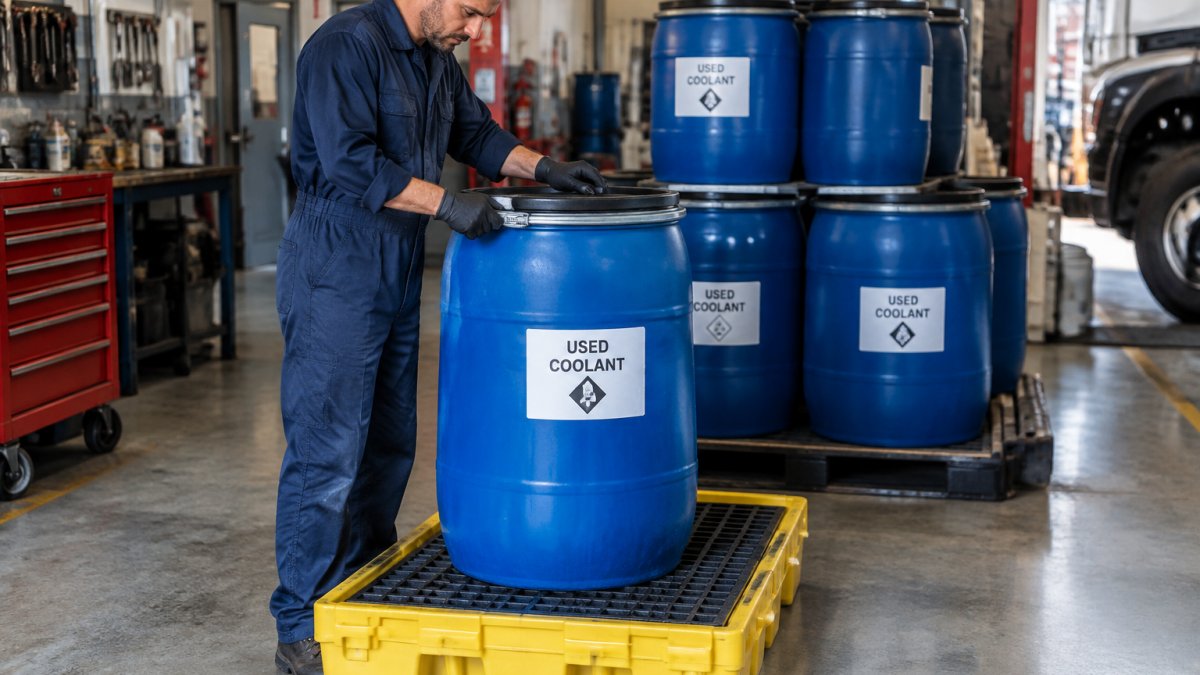
Unlabelled containers cause a second problem. If a drum has no label, nobody knows what's inside, so nobody can dispose of it correctly.
Store used coolant like this instead:
- Sealed containers with tight lids
- Clear labels: "Used Coolant - Hazardous Waste"
- Bunded pallets or spill trays under every container
A safety data sheet tells you and your staff exactly what you're handling. Keep one for every fluid on site.
Store used coolant like this instead.
| Requirement | What it means in practice |
|---|---|
| Sealed containers | Tight lids on every container |
| Clear labels | "Used Coolant - Hazardous Waste" |
| Bunding | Bunded pallets or spill trays under every container |
| Location | Under cover, away from drains |
| Safety data sheet | One on file for the neat product |
Step-by-Step: Containing a Coolant Spill Before It Spreads
Spills happen. What matters is the first five minutes. Here's how we'd handle a coolant spill on a workshop floor.
- Stop the source. Upright the drum or close the valve. Don't step through the spill to do it.
- Clear the area. Move people back and keep vehicles off the wet patch.
- Protect the drains. Drop a drain seal or sandbag over any nearby pit before anything else.
- Contain the spread. Ring the spill with absorbent socks or granules, working from the outside in.
- Absorb the fluid. Cover the pool with absorbent material and let it soak in.
- Bag and label. Scoop the used absorbent into a sealed, labelled container. It's now hazardous waste too.
- Clean the floor. Wash the area with a small amount of water and detergent, then absorb that as well. Don't hose it toward a drain.
- Record it. Note the volume, date and what you did. Your regulator may ask.
Watch out: kitty litter and sawdust work in a pinch, but they don't neutralise anything. The soaked material still needs licensed disposal.
Recycling vs Disposal: What Happens to Coolant After Collection
Collected coolant usually goes one of two ways, depending on the fluid chemistry, contamination load and the receiving facility's licence. Knowing the difference helps you ask the right questions before handing over a drum.
How a Licensed Facility Processes Used Coolant
A typical processing sequence for glycol-based metalworking fluid looks like this:
- Receipt and classification. The facility checks your paperwork and may sample the load to confirm what it is. Mixed loads (coolant plus solvent, or coolant plus heavy oil) are often rejected or reclassified.
- Separation. The fluid passes through settling or centrifugation to remove metal fines, swarf and tramp oil. Tramp oil is skimmed and routed to the waste oil stream.
- Treatment. The remaining water-glycol mix is treated, commonly by filtration, dissolved air flotation or chemical precipitation, to strip residual metals and suspended solids.
- Recovery or destruction. Recoverable glycol can be distilled and reused as a base fluid or as an industrial feedstock. What cannot be recovered is sent for controlled destruction at a licensed facility.
- Water discharge. Treated water is only released once it meets the facility's trade waste or environmental licence conditions.
That sequence is why a licensed collector asks what else is in the drum. Coolant cross-contaminated with chlorinated solvent or a large volume of hydraulic oil may not be recyclable at all, it becomes a disposal-only load, and the cost reflects that.
Why Coolant Chemistry Changes the Disposal Route
Not all coolants behave the same way at the tip, and the differences matter for how you store and consign them.
Ethylene glycol and propylene glycol are both water-miscible and both toxic, but propylene glycol is generally more readily broken down in biological treatment.
OAT (organic acid technology) and IAT (inorganic acid technology) inhibitors are the corrosion packages added to coolants.
What the Paper Trail Should Show
Every consignment of used coolant should leave your site with a record identifying the waste, volume, date and receiving facility. That record is your evidence of proper disposal if a regulator asks.
If a quote seems unusually cheap, ask where the fluid actually goes. The difference between a licensed recycler and an unlicensed operator is often the difference between a clean audit and a clean-up bill.
DIY Change vs Liquid Waste Removal Services: A Cost and Risk Comparison
A DIY coolant change is workable if you have one machine, small volumes and a licensed drop-off nearby. Most workshops don't fit that picture. The useful question is not "which is cheaper on the day" but "which is cheaper once storage, time, transport and risk are counted".
The Real Cost of a DIY Coolant Change
A DIY change looks cheap because the drum is already on site and drop-off is free or low-cost. The costs that don't appear on the receipt are the ones that bite:
- Storage footprint. A 200-litre drum of used coolant needs bunded storage, under cover, away from drains. That is floor space you could be using for a vehicle or a machine.
- Technician time. Draining, decanting, labelling, loading and driving to a transfer station typically takes half a day once travel is counted. That is half a day of billable work lost.
- Vehicle and transfer risk. Lifting drums onto a ute or trailer is where most workshop spills happen. A spill during transfer is your spill, on your insurance, with your clean-up cost.
When Professional Collection Makes Sense
Professional collection tends to win on cost once you produce more than a drum or two a year, or once storage space is tight. Many workshops settle into a scheduled collection rather than a one-off job.
A scheduled service also solves accumulation. Coolant sitting in drums for months picks up more tramp oil and bacteria, which can push a recyclable load toward disposal-only classification.
A Simple Decision Framework
Use these questions to decide which route fits your workshop:
- How much used coolant do you generate in a year? If it is under a couple of drums and you have a licensed drop-off within easy driving distance, DIY may be viable.
- Do you have bunded, covered storage space you are not using for anything else? If not, the storage cost of DIY is real.
- Can a technician be spared for half a day per change? If the answer is no, the labour cost of DIY usually exceeds a collection fee.
- Do you have a vehicle and a safe loading point? Transfer is the highest-risk step in the DIY route.
- Can you produce a compliant disposal record? If not, the DIY route creates a compliance gap.
If you answer "no" to two or more of those questions, a collection service is usually the lower-risk and lower-total-cost option.
What to Ask a Collection Provider
Before you book, ask three things: where the fluid goes, what licence the receiving facility holds, and what documentation you receive. A provider that answers all three without hesitation is the one to use. You can see the industrial liquid waste removal service we run for workshops across the metro area, or request a quote or book a job and compare it against your own time, storage and risk.
Watch out: the cheapest quote is not always the cheapest disposal. A low price that ends with the load going to an unlicensed operator is a false economy once the clean-up bill arrives.
Keeping Coolant Out of Your Industrial Wash Bay Cleaning Routine
Coolant and wash bay water don't mix well.
That's a problem: oil separators catch oil and silt, not dissolved glycol.
Keep the two streams apart:
- Store coolant drums well away from the wash bay
- Never rinse coolant containers over the pit
- Book regular wash bay and oil separator cleaning so built-up sludge doesn't overwhelm the system
A clean separator does its job. A neglected one just moves the problem downstream.
Kwinana Site Services has spent 18 years handling liquid waste across WA.
Get started with Kwinana Site Services and get your workshop compliant without the fuss.
Frequently Asked Questions
Is it illegal to pour coolant down the drain?
Yes. Used coolant contains ethylene glycol and heavy metals picked up from the engine, and putting it into a sink, toilet or stormwater drain is harmful to the environment. Stormwater drains typically flow untreated to waterways, so a single drum can contaminate a large volume of water and kill aquatic life. Check any trade waste agreement with the local water authority before discharging anything, so treat every drop as hazardous waste and book a licensed collection.
How should I store used coolant before collection?
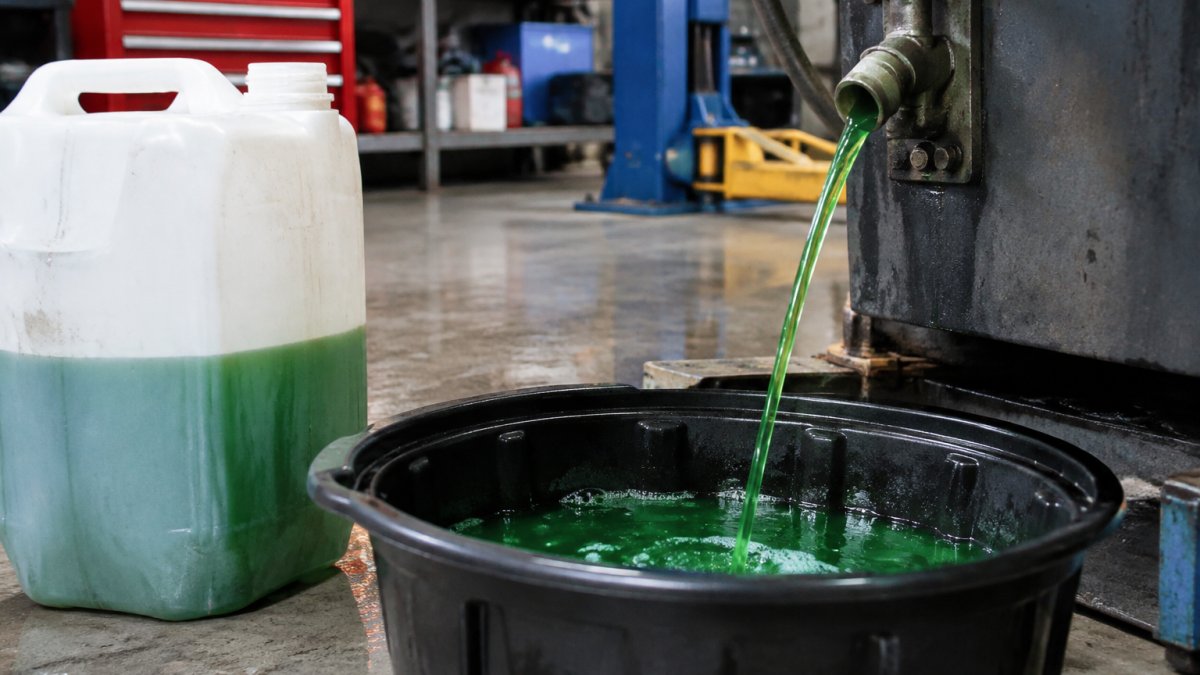
Drain it into a clean, sealable container, ideally the original coolant bottle or a dedicated drum reserved for that purpose. Fit a tight lid, label it clearly as used coolant with the date, and keep it on a spill bund or tray away from drains and walkways. Never mix coolant with used oil or solvents, because a mixed batch is harder to recycle and may be rejected. Store the containers under cover so rain cannot fill them and cause an overflow.
Can workshop coolant be recycled?
Used coolant can be processed to separate water, glycol and contaminants, and licensed facilities recover the glycol for reuse or safe destruction. The catch is that recycling works best when the batch is not contaminated with oil, brake fluid or degreaser, so keep coolant streams separate. Your waste contractor should confirm where the batch goes and provide documentation showing it reached a licensed facility. Ask for that paperwork every time, not just on the first collection.
What documentation is required for liquid waste disposal?
Expect a waste tracking or consignment record for each collection, listing the waste type, volume, date, transporter and receiving facility. The receiving facility should hold the appropriate licence, and you should keep records for as long as your regulator requires. These documents are your proof of compliance if a council or regulator inspects the workshop. File them with your safety data sheets and trade waste paperwork so everything is in one place.