 ultimate-guide
Liquid Waste Management for Events: The Complete Guide
Last Updated: November 2, 2026
Quick Summary
Liquid waste management for events is the planning, collection, transport and compliant disposal of every non-solid waste stream a site produces, from portable toilet sewage to kitchen grease and wash-down water. Build a written plan that maps each stream, estimates daily volumes, sets collection frequency and records disposal pathways. Mixing streams is the most common compliance failure, and the event organiser remains responsible for proving lawful disposal.
- Map toilet blocks, kitchen zones, generator areas and vacuum truck access before building your waste plan.
- Estimate volumes per day rather than per event, then add a buffer for peak periods.
- Schedule portable toilet pump-outs overnight or pre-gates so vacuum trucks can access units.
- Require food vendors to confirm grease trap capacity in their site agreement before trading.
- Keep disposal dockets or consignment notes for every load and be able to produce them within the hour.
Table of Contents
- What Liquid Waste Management for Events Actually Involves
- Building Your Event Waste Management Plan
- Portable Toilet Pump Out: Scheduling and Access
- Grease Trap Waste Disposal for Event Kitchens
- Liquid Waste Disposal: Permits, Responsibilities and Disposal Pathways
- Spill Response and Contingency Planning on Event Sites
- Choosing a Provider and Getting a Quote
- Get a Quote for Your Event Pump-Outs
- Frequently Asked Questions
What Liquid Waste Management for Events Actually Involves
Liquid waste management for events is the planning, collection, transport and compliant disposal of every non-solid waste stream a site produces, from portable toilet sewage to kitchen grease and wash-down water. Get it wrong and you are dealing with overflows, site closures and clean-up costs mid-event. Events that plan their waste streams early tend to run clean, while those that don't often end up scrambling mid-event.
The scale of the task depends on your site. A weekend festival with 5,000 patrons and a licensed bar generates a very different waste profile from a corporate function with catering for 200. What stays the same is the need to map every stream before the first marquee goes up.
The Waste Streams You Will Be Dealing With
Most event organisers underestimate how many separate streams they are managing. Each one has its own collection method, disposal pathway and compliance requirement.
- Sewage and holding tank waste from portable toilets and site amenities, removed by vacuum truck
- Grease trap waste from event kitchens and food vendors, which must never enter stormwater
- Wash-down and greywater from hand basins, dishwashing and cleaning
- Oily water and coolant if generators, plant or vehicles are serviced on site
- Sludge and pit waste from temporary facilities or pre-existing site infrastructure
For non-toilet streams such as bulk wash-down water, coolant and oily water, industrial liquid waste removal covers the heavy end of the job. The key distinction is disposal pathway: sewage goes to a licensed treatment facility, grease trap waste goes to a licensed rendering or treatment facility, and hazardous streams need separate handling. Mixing streams is the most common compliance failure we see, and it is entirely avoidable with a written plan.
Building Your Event Waste Management Plan
An event waste management plan is a written document that identifies every waste stream, estimates volumes, assigns responsibility and specifies collection frequency and disposal pathways. It is the single document that keeps an event compliant and keeps contractors accountable.
Build it in this order:
- Map the site. Mark toilet blocks, kitchen and vendor zones, generator and plant areas, and the access route for a vacuum truck.
- List every stream using the categories above, and note which are hazardous.
- Estimate volumes per day, not per event.
- Set collection frequency and access windows around event programming.
- Name a responsible person on site for each stream.
- Record disposal pathways and keep consignment or disposal records.
Estimating Liquid Waste Volumes and Service Capacity
Volume estimation is where plans most often fall apart. Underestimate and you get overflows at peak; overestimate and you pay for capacity you never use. A common approach is to work from patron numbers, event duration and the number of toilet units, then add a buffer for peak periods such as headline sets or meal service.
Capacity planning also has to account for access. A vacuum truck needs room to park, a safe hose run and a clear path out. If your site layout blocks vehicle access during peak hours, schedule pump-outs before gates open or after close. Build the estimate into a simple table so your provider can quote accurately:
| Stream | Source | Estimate Basis | Collection Timing |
|---|---|---|---|
| Sewage | Portable toilets | Units × event days | Pre-gates or overnight |
| Grease trap waste | Event kitchens | Vendor count × service days | After meal peaks |
| Greywater | Hand basins, cleaning | Site area and activity | Daily |
| Oily water | Generators, plant | Plant servicing schedule | As generated |
Portable Toilet Pump Out: Scheduling and Access
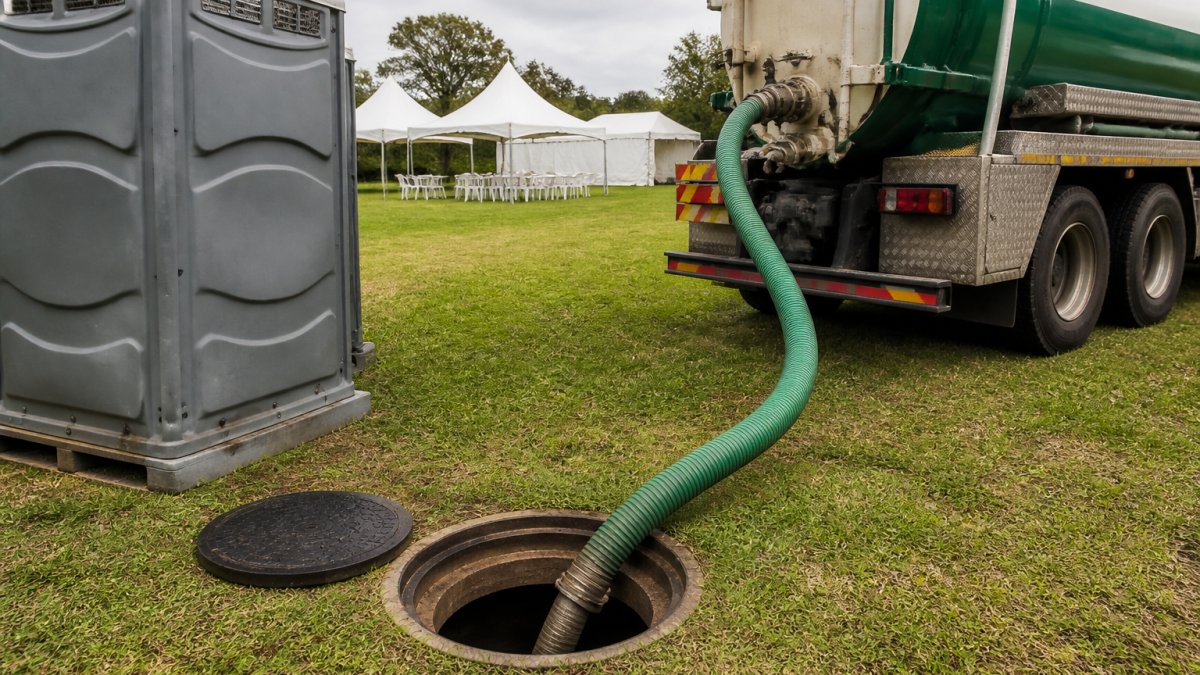
Portable toilet pump out is the scheduled removal of sewage from portable units and holding tanks by vacuum truck, and it is the service that most directly affects patron experience. A full unit is a health hazard and a reputation problem within minutes.
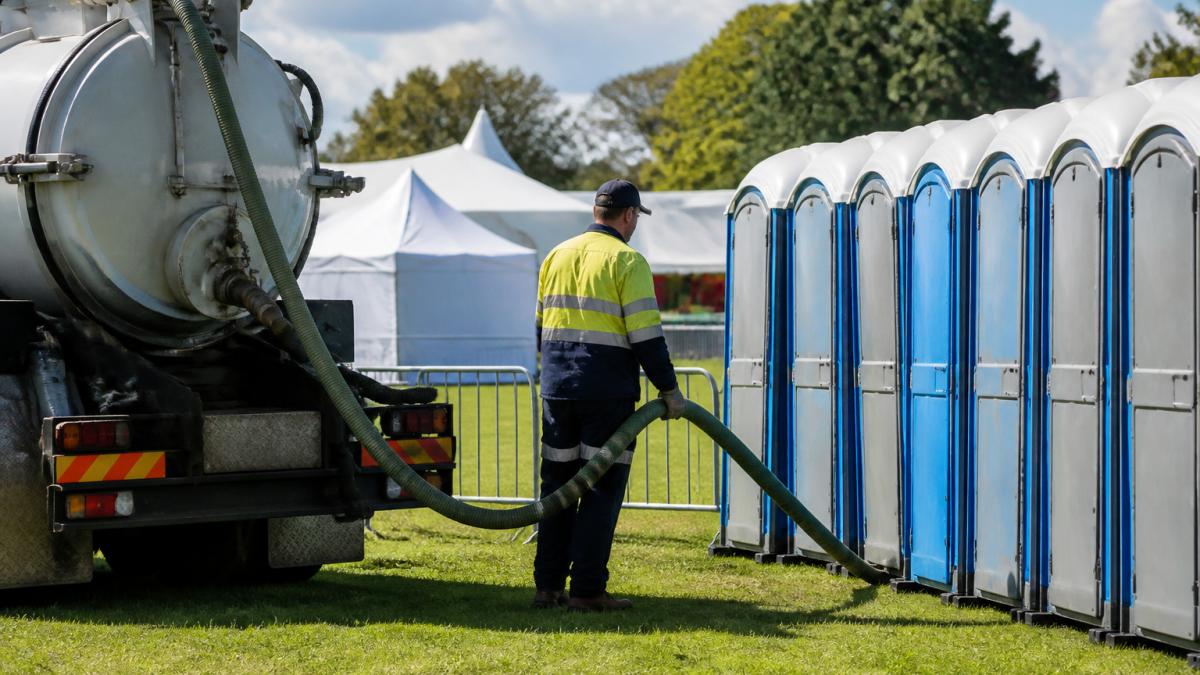
Schedule pump-outs around your event's rhythm, not around convenience. For multi-day events, overnight servicing keeps units fresh for the morning rush. For single-day events with high attendance, a mid-event pump-out during a low-traffic window prevents the afternoon overflow.
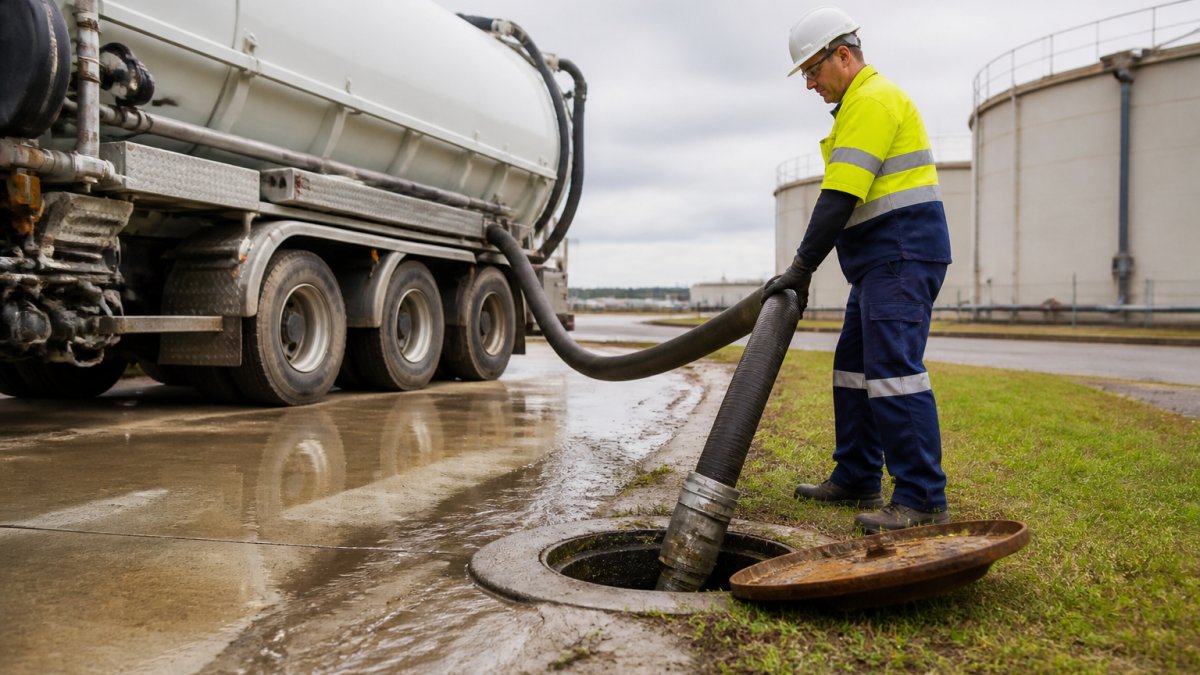
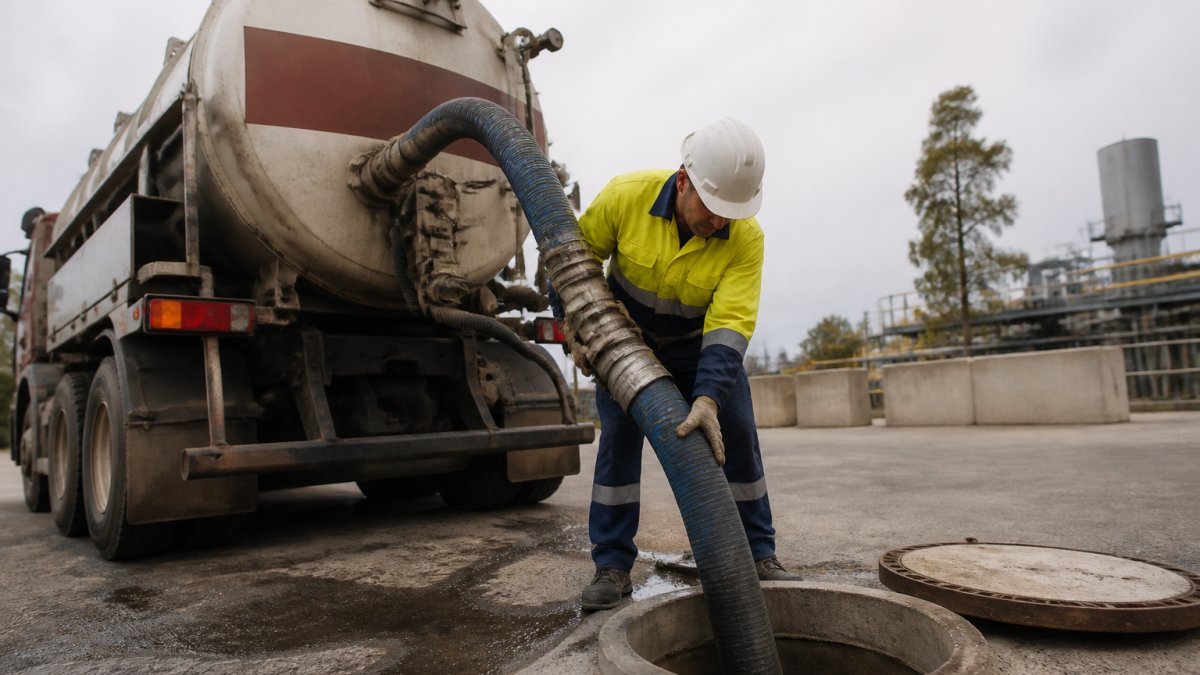
Watch out: the most common failure is booking a pump-out without confirming vehicle access, which leaves the truck circling while units fill. For scheduled and one-off servicing, site toilet and holding tank pump outs are the core of what we do.
Grease Trap Waste Disposal for Event Kitchens
Grease trap waste disposal is the collection and lawful treatment of fats, oils and grease captured from event kitchen and vendor wastewater. It is a separate stream from sewage and needs a separate collection arrangement.
Food vendors are the usual weak point. A vendor who has not serviced their own trap before arriving can fill it within a day of trading. Require vendors to confirm trap capacity in their site agreement, and position grease collection points away from patron areas. Grease that reaches stormwater is an environmental harm issue, not just a cleaning problem, and clean-up costs land on the event organiser. Keep collection dockets for every load.
Liquid Waste Disposal: Permits, Responsibilities and Disposal Pathways
Liquid waste disposal must go to a licensed facility that is authorised to receive that specific stream. Responsibility sits with the event organiser and their contractors: you need to know where every load goes and be able to prove it.
Permits and approvals to confirm before contracts are signed.
- Whether your event approval or venue agreement imposes conditions on waste storage location, collection hours or maximum volumes held on site.
- Whether any stream requires a specific approval to discharge, for example, trade waste approval from the local water authority if any liquid is discharged to sewer rather than tankered away (Apply to discharge trade waste).
- Whether the receiving facility is licensed to accept that specific waste code, not just waste generally.
- Whether hazardous streams require separate manifest or tracking documentation under state waste tracking rules.
- Whether your contractor holds the transport authorisations required for the streams they will carry.
Who is responsible for what. The event organiser carries the overall duty to ensure waste is lawfully managed, even where a contractor performs the work. The venue may carry obligations under its own environmental approvals and trade waste agreements.
Disposal pathways by stream. Sewage and holding tank waste go to a licensed wastewater treatment facility. Grease trap waste goes to a licensed rendering or treatment facility equipped to receive it.
Records to hold. Keep disposal dockets or consignment notes for every load, showing the stream, volume, date, transporter and receiving facility.
The practical checklist:
- Written confirmation of the receiving facility and its licence for each stream
- Transport arrangements and authorisations documented
- Disposal dockets or consignment notes retained for every load
- Hazardous streams segregated, labelled and manifested as required
- Trade waste or discharge approvals confirmed where any liquid goes to sewer
- Spill kit on site and staff briefed on its use
- A named person responsible for compliance records during and after the event
Watch out: organisers commonly assume the contractor's paperwork discharges the organiser's duty. It does not.
Spill Response and Contingency Planning on Event Sites
Spill response is the part of the plan nobody wants to use and everybody needs. A split hose, an overfilled unit or a grease spill near a drain can escalate from a cleaning job into an environmental incident within minutes.
Keep a spill kit at each waste collection point and brief at least two people per shift on its location and use. Have a named contact for urgent callouts and a pre-agreed access route for a response vehicle. If a spill reaches a drain or waterway, contain it first, then notify the relevant authority as required. Document the incident, the response and the disposal of any contaminated material.
Choosing a Provider and Getting a Quote
Choosing a provider comes down to four things: whether they turn up, whether the quote is complete, whether disposal is lawful, and whether they can scale when your event grows. Price alone tells you nothing about the first three.
Ask every provider the same questions:
- Can you confirm the licensed facility each stream goes to?
- What is included in the quote, and what triggers an extra charge?
- What is your callout response time for urgent jobs?
- Can you service multiple sites or scale up mid-event?
- Can you provide references from comparable event or industrial sites?
A straight quote names the streams, the collection frequency, the access assumptions and the disposal pathway. Kwinana Site Services has 18 years of experience in liquid waste across WA. About Kwinana Site Services covers the business's background and credentials. When you are ready, get a quote from Kwinana Site Services and we will confirm the scope for your event.
Get a Quote for Your Event Pump-Outs
The challenge with event liquid waste is that the plan has to hold on the busiest day, not the quietest one.
Kwinana Site Services handles event pump-outs with straight quotes, disposal at licensed and environmentally friendly facilities, and both regular runs and one-off jobs.
Get started with Kwinana Site Services and lock in your event pump-outs before the gates open.
Frequently Asked Questions
What types of liquid waste are generated at events?
Most events produce three main streams. Portable toilet and holding tank sewage is the biggest by volume, followed by grease trap and cooking wastewater from catering and food stalls, and wash-down water from cleaning, bars and temporary sinks. Larger sites may also generate oily water from generators and machinery. Each stream has its own disposal pathway, so identify them early and give your provider volumes and locations rather than a single lump figure.
How often should event toilets and wastewater tanks be pumped out?
Frequency depends on headcount, duration and tank size. A multi-day festival with high foot traffic typically needs servicing daily or even mid-event, while a one-day community event may only need a single pump out before and after. Build a portable toilet pump out schedule around peak attendance windows and confirm access routes for the vacuum truck. Ask your provider to quote on a service frequency, not just a one-off visit, so nothing overflows.
Where can event liquid waste be disposed of?
Only at licensed facilities that accept the specific waste type. Grease trap waste, sewage and oily water often go to different receiving sites, and some facilities have contamination limits. A compliant liquid waste disposal provider tracks this for you and can show where each load went. Never allow a contractor to discharge to stormwater drains or open ground, as runoff can cause environmental harm and expose organisers to penalties.
What should an event waste management plan include?
A workable event waste management plan covers waste stream identification, estimated volumes, bin and tank placement, collection frequency, site access for vacuum trucks, nominated responsible people, licensed disposal destinations and a spill response procedure. Add a contingency for wet weather and higher-than-expected attendance. Keep the plan short enough that crew actually read it, and share the liquid waste section with your sanitation provider before the bump-in date.
How do you choose a liquid waste removal provider for an event?
Ask three things: can they show licensed disposal records, can they commit to a service window rather than a vague day, and can they scale up for urgent callouts. Request references from similar events or sites. Get a written quote that lists what is included, how extra loads are charged and any access or after-hours fees. A provider with local experience and a clear quote removes most of the risk from event day.