 ultimate-guide
Compliance for Liquid Waste Disposal: A Practical Site Guide
Last Updated: November 7, 2026
Quick Summary
Compliance for liquid waste disposal starts with classifying every stream as inert, controlled or prescribed, then confirming your prescribed premises status, waste tracking obligations, receiving facility licence and trade waste consent. You remain responsible under duty of care after the load leaves your site, so keep an unbroken chain of custody from tank to treatment facility.
- Laboratory analysis is needed when the waste source is uncertain, a stream changes, or the receiving facility asks for it.
- Keep a waste tracking document, disposal receipt and internal log for every load.
- Verify the contractor's licence and confirm the nominated treatment facility holds a current licence.
- Stop the source, contain the spill and report to the regulator if the incident meets the reporting threshold.
- Cost depends on volume, classification, access, frequency and distance to the treatment facility.
Table of Contents
- Why Liquid Waste Disposal Compliance Starts With Classification
- Liquid Waste Disposal Regulations WA: What Actually Applies to Your Site
- Hazardous Liquid Waste Disposal: Extra Controls for the Nasty Stuff
- Choosing a Licensed Waste Contractor and Verifying Where It Goes
- Liquid Waste Disposal Records: The Paper Trail That Protects You
- Incident Response and Fixing Non-Compliance Before It Escalates
- What Drives Cost and How to Budget for Compliant Disposal
- Booking a Compliant Pump-Out for Your Site
- Frequently Asked Questions
Why Liquid Waste Disposal Compliance Starts With Classification
Get the classification wrong and everything downstream fails: the contractor quotes the wrong treatment, the paperwork doesn't match the load, and the site carries the risk. Compliance for liquid waste disposal begins with one question: what exactly is in the tank?
Misclassification is one of the most common problems in liquid waste work. A tank labelled "wash water" that actually holds oily separator sludge changes the whole job.
How Liquid Waste Classification Decides Everything Else
Classification determines the waste stream, the transport method, the treatment facility and the records you must keep. In Western Australia, the Department of Water and Environmental Regulation guidance on waste classification sets out how waste is categorised and what that means for handling and disposal.
Broadly, liquid waste falls into three groups:
- Inert or low-risk streams such as clean stormwater or non-contaminated wash water
- Controlled or prescribed streams including oily water, coolant and separator sludge
- Hazardous streams carrying dangerous goods, solvents or heavy contamination
Each tier carries different storage, transport and documentation requirements. Get the tier right and the rest of the process follows a predictable path.
Testing and Characterisation: When You Need Lab Results
You need laboratory analysis when the source of the waste is uncertain, when a stream changes, or when the receiving facility asks for it. A workshop wash bay that has only ever handled detergent and water rarely needs testing.
A common mistake is assuming colour tells you the risk. Clear liquid can still carry dissolved contaminants. If you cannot document what went into the tank, have it characterised before it leaves your site.
Liquid Waste Disposal Regulations WA: What Actually Applies to Your Site
Three layers of rules apply to most industrial and construction sites, and all three can bite at once. The national layer sets principles and definitions; the state layer sets the operative obligations, licensing and tracking; local government and water utility rules sit on top for trade waste discharge and on-site storage. Your duty of care runs through all of them.
National Principles Versus State Rules
National frameworks, the intergovernmental agreement on the environment and the National Environment Protection Measures made under the National Environment Protection Council Act 1994 (Cth), set consistent principles for waste classification, movement and reporting.
In Western Australia the operative state layer includes:
- The Environmental Protection Act 1986 (WA), which creates the general environmental duty, pollution offences and the licensing regime for prescribed premises
- The Environmental Protection Regulations 1987 (WA), which define categories of prescribed premises and waste handling requirements
- The Waste Avoidance and Resource Recovery Act 2007 (WA), which sets the waste hierarchy and state waste strategy
If your site discharges anything to sewer, the water utility's trade waste rules apply on top of that, and local government requirements cover on-site storage, bunding and sometimes trade waste pre-treatment.
A Practical Compliance Checklist
Use this as a starting point, then confirm the current version with the relevant regulator, because instruments are amended and local requirements vary by council.
- Classify every stream. Identify whether each tank or pit holds inert, controlled or prescribed waste, and record the basis for that decision.
- Confirm prescribed premises status. Check whether your site activity falls within a category of prescribed premises under the Environmental Protection Regulations 1987 (WA) and whether a licence, works approval or registration is required.
- Check waste tracking obligations. Confirm whether the stream is controlled waste requiring a tracking document, and who must sign each leg.
- Verify the receiving facility. Confirm the treatment or disposal facility holds a current licence to accept that waste type.
- Check trade waste consent. If you discharge to sewer, confirm your trade waste agreement covers the volume and quality, and that pre-treatment is working.
- Confirm storage and bunding. Check local government and state requirements for containment capacity, labelling and separation distances.
- Set up records. Keep tracking documents, disposal receipts and internal logs for the period the regulator requires.
- Prepare for incidents. Have a spill response procedure and know the reporting threshold for your regulator.
A common failure is treating a state tracking form as the whole compliance story. It is one part of the picture, alongside the facility licence, trade waste consent and local storage rules.
Duty of Care After the Load Leaves
Duty of care is the part site managers underestimate. You remain responsible for your waste after it leaves the gate. If it ends up dumped on a rural block, the paper trail leads back to you. That single principle explains why contractor vetting and record keeping matter as much as the pump-out itself. The practical test is whether you can show, in writing, what the waste was, who took it, where it went and that the receiving facility was licensed to take it.
Hazardous Liquid Waste Disposal: Extra Controls for the Nasty Stuff
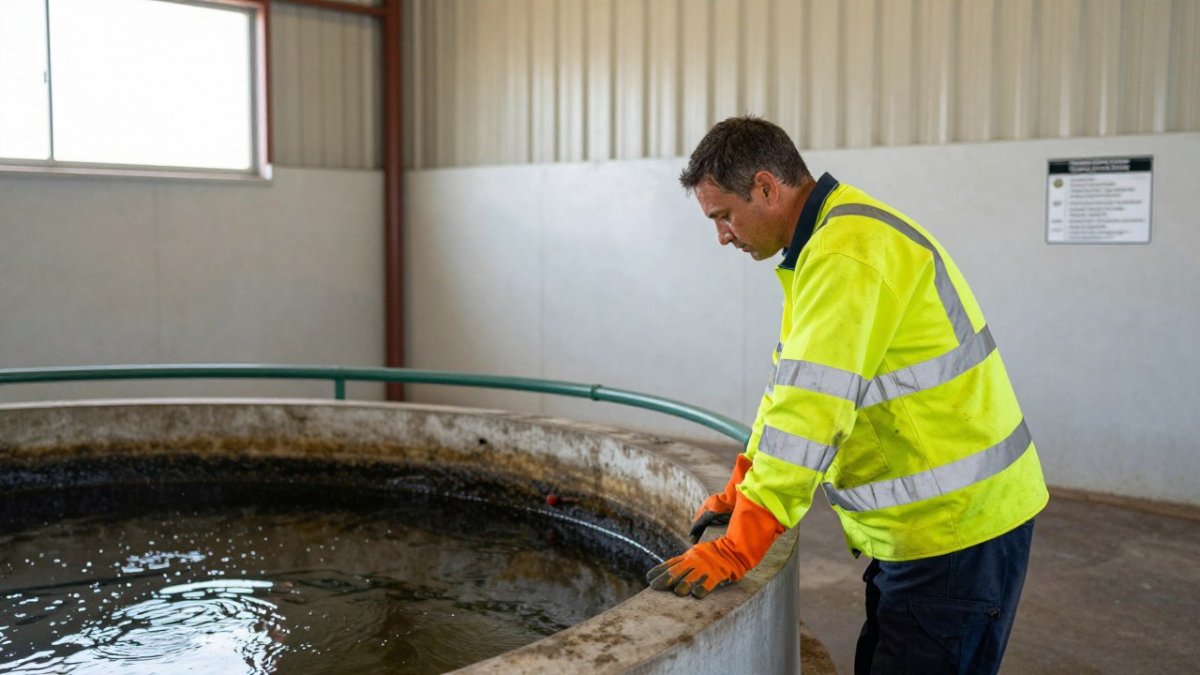
Hazardous liquid waste disposal demands controls that go well beyond a standard pump-out. Oily water, separator sludge, coolant and solvent-contaminated streams need secondary containment, correct labelling and a contractor equipped to handle dangerous goods.
Storage, Segregation and Spill Prevention Before Collection
Segregation prevents the most expensive mistakes. Keep oily water separate from wash water, and never tip coolant into a separator pit. Mixing streams can turn a low-risk load into a hazardous one and increase your disposal cost.
- Store tanks inside bunded areas with capacity for the full volume plus rainfall
- Label every tank with its contents and date
- Keep spill kits stocked and accessible near fill points
For separator and wash bay sludge, see our wash bay and oil separator cleaning service.
Choosing a Licensed Waste Contractor and Verifying Where It Goes
A licensed contractor is one that can show you, in writing, where your waste is treated and that the receiving facility is permitted to take it.
When comparing quotes, check that the treatment facility is named. If a contractor cannot name where the load is going, treat that as a warning sign.
Verification is straightforward:
- Ask for the contractor's waste licence and carrier details
- Confirm the nominated treatment facility holds a current licence
- Request disposal documentation for the previous job
- Check who actually owns and runs the business
You can read more about our WA-owned operation and its 18 years in liquid waste if you want to run that check on us. When you're ready, you can request a quote or book a job directly.
Liquid Waste Disposal Records: The Paper Trail That Protects You
Liquid waste disposal records are your defence if a regulator or client asks questions months later. At minimum, keep a waste tracking document for each load, the disposal receipt from the treatment facility, and your internal log of tank volumes and dates. The stronger position is an unbroken chain of custody that shows each handover and each facility that handled the load.
Chain of Custody From Tank to Treatment Facility
Chain of custody means an unbroken record from the moment waste leaves your site to the moment it is treated or disposed of. Every handover is documented: who collected it, when, how much, what it contained and where it went. A practical chain has five links:
- Generation record. Tank or pit ID, estimated volume, classification and the basis for it, date and the person who made the call.
- Collection record. Waste tracking form completed at collection, signed by the site representative and the driver, with the vehicle and carrier details.
- Transport record. Carrier licence details and the nominated receiving facility, so the load can be traced if it is diverted.
- Treatment or disposal receipt. Facility receipt confirming the waste was received and how it was treated or disposed of.
- Reconciliation. A periodic check that every generation record has a matching receipt, and that volumes reconcile within a reasonable tolerance.
Watch out: the weakest link is usually the handover signature, a form signed by someone who was not there, or a receipt that names a different facility from the one on the tracking form, breaks the chain and is hard to repair after the fact.
Retention and Audit-Readiness
Retention periods differ by instrument and by waste type, so confirm the current requirement with the relevant regulator rather than assuming a single number.
Audit-readiness is mostly about how records are stored, not how many you have:
- Store tracking forms, receipts and internal logs together by load reference, not in separate piles
- Keep digital copies with a backup, and make sure the backup is restorable
- Record the classification decision and who made it, so the reasoning is visible later
If any link is missing, you cannot prove compliant disposal. The goal is that a regulator or client can pick any load from the past year and follow it from tank to treatment facility without asking you for a missing document.
Incident Response and Fixing Non-Compliance Before It Escalates
A spill or an overflowing separator is a compliance incident, and speed matters more than blame. Stop the source, contain what has escaped, and call your contractor before the material reaches drains or soil.
The practical sequence:
- Stop the flow and isolate the area
- Contain with bunds, absorbent material or shut-off valves
- Record what happened, when and how much
- Arrange emergency removal and proper disposal
- Report to the relevant regulator if the incident meets the reporting threshold
Self-reporting early usually works in your favour. Concealment rarely does. If a separator has been overflowing for weeks, get it cleaned and documented rather than waiting for an inspection to find it.
What Drives Cost and How to Budget for Compliant Disposal
Cost depends on volume, classification, access, frequency and distance to the treatment facility. A hazardous load needing specialist treatment costs more than a routine site toilet pump-out.
Budget by separating routine and reactive spend.
We quote straight, with no hidden surprises. Pricing depends on volume, access and frequency, so get in touch for a current quote rather than working from guesswork.
| Cost driver | What pushes it up | How to control it |
|---|---|---|
| Volume | Larger tanks, longer runs | Schedule before tanks peak |
| Classification | Hazardous or mixed streams | Segregate at source |
| Access | Tight entries, long hose runs | Clear access routes in advance |
| Frequency | Emergency callouts | Book regular scheduled runs |
| Treatment | Specialist facility required | Confirm classification early |
Booking a Compliant Pump-Out for Your Site
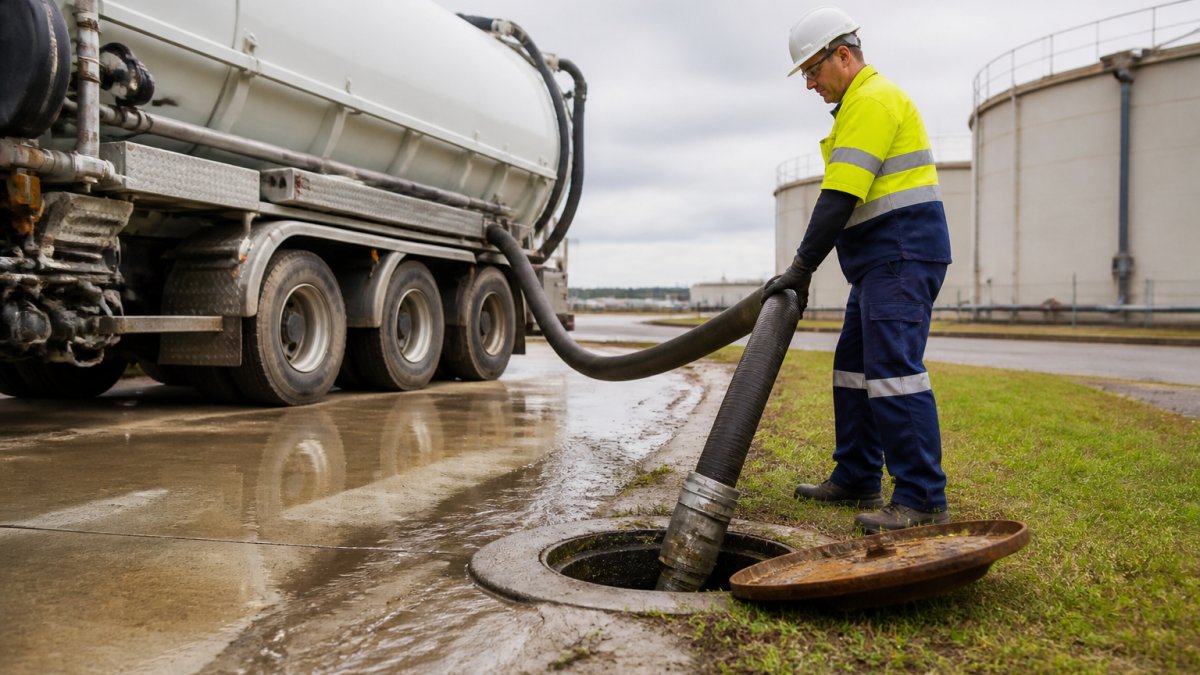
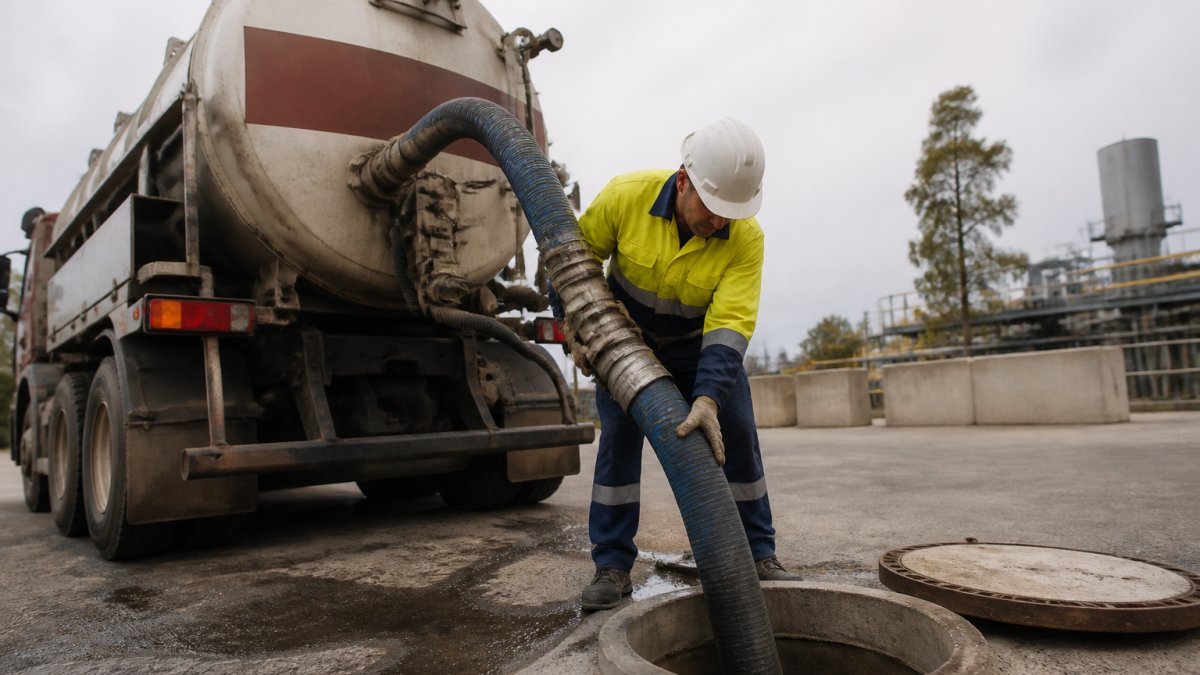
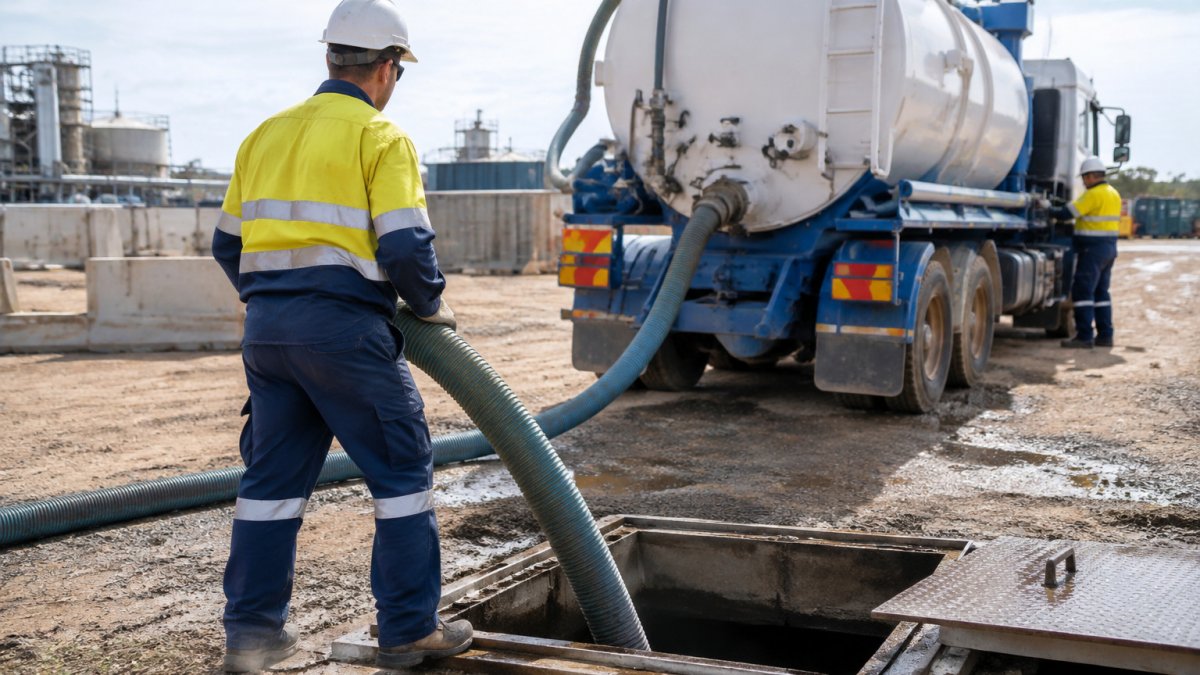
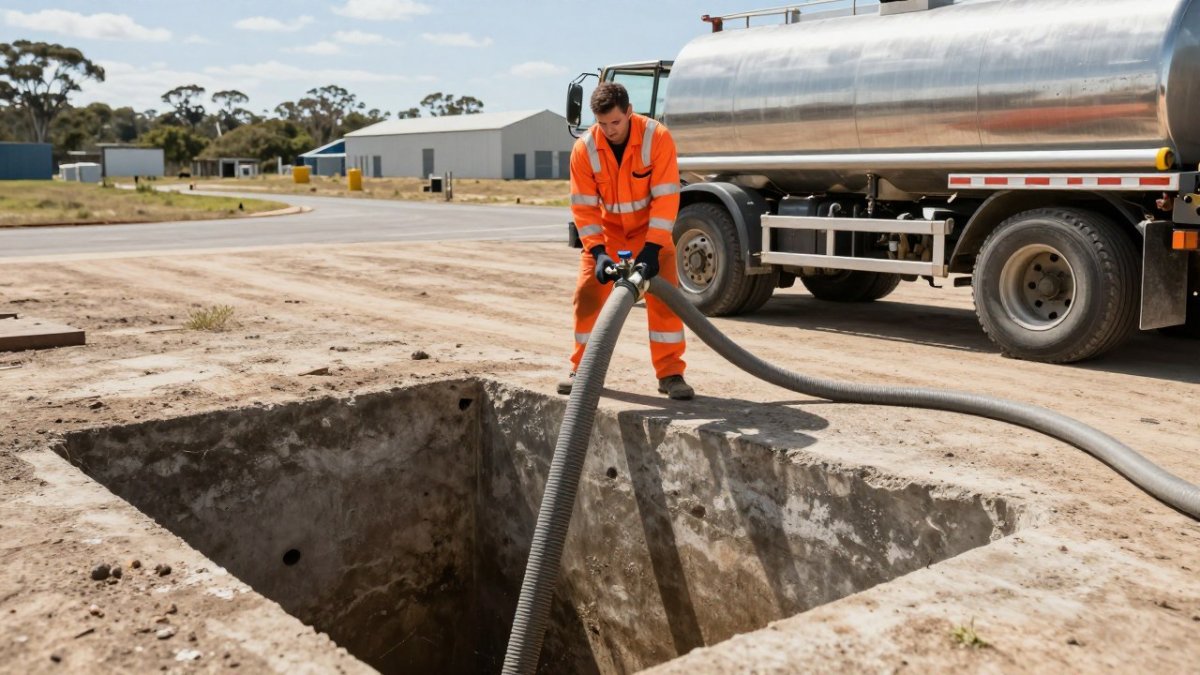
Booking a compliant pump-out takes four steps, and each one protects you later. Confirm what's in the tank, choose a licensed contractor, agree the schedule, and keep the paperwork.
- Classify the contents. Identify the stream and whether testing is needed.
- Confirm the contractor and facility. Check licences and where the load goes.
- Agree access and timing. Tell the driver about gates, hose distance and site hours.
- File the records. Keep tracking forms and receipts together.
For site toilets and holding tanks, see our site toilet and holding tank pump-out service. For industrial streams, see our industrial liquid waste removal service.
Compliance only holds up if the waste actually goes where the paperwork says.
Frequently Asked Questions
What rules apply to liquid waste disposal in Western Australia?
Liquid waste disposal in WA is governed by state environmental protection legislation, with the environmental regulator overseeing waste classification, tracking and licensing of carriers and facilities. On top of that, local councils and water authorities can impose their own conditions on trade waste discharged to sewer. The practical upshot is that you need to classify your waste, use a licensed contractor, send it to a licensed facility and keep records. Requirements vary by waste type and location, so confirm the specifics for your site before your first collection.
How do I classify liquid waste before arranging disposal?
Start by identifying what the waste actually is and where it came from: portable toilet effluent, wash bay oily water, coolant, sludge from an oil separator or something else. Check whether it carries hazardous characteristics such as flammability, corrosiveness or toxicity, and whether it contains dangerous goods. If the source is uncertain or your processes have changed, arrange testing rather than guessing. Correct liquid waste classification determines the storage, transport, paperwork and treatment route, so getting it wrong at this stage creates problems all the way down the chain.
What records should a business keep for liquid waste disposal?
Keep a record for every collection: the date, the waste type and volume, the contractor and vehicle details, the destination facility, and any tracking or manifest documentation. Store waste classification and test results alongside it, plus copies of contractor and facility licences. Retain these liquid waste disposal records for the period your regulator or auditor expects, and keep them accessible rather than buried in a filing cabinet. If a spill or compliance question arises months later, this paperwork is what demonstrates your duty of care was met.
Who is responsible for liquid waste once it leaves a site?
Responsibility does not end at the gate. Under duty of care principles, the waste generator remains accountable for ensuring the waste is handled lawfully through transport, treatment and disposal. That means using a licensed carrier, confirming the receiving facility is authorised to accept that waste type, and keeping documentation that traces the load end to end. If waste is illegally dumped en route, the paper trail showing you engaged a licensed contractor and verified the destination is your main protection.
How can I check that liquid waste is going to an authorised facility?
Ask your contractor which facility the load will go to and confirm that facility holds a licence to accept your specific waste type, not just liquid waste generally. Request licence details and keep a copy on file. For hazardous loads, ask for the tracking documentation that follows the load to the facility. A contractor who answers these questions directly and provides documentation is showing you the process is genuine. Vague answers or reluctance to name the destination are a warning sign worth taking seriously.
What information should I provide when booking a liquid waste pump-out?
Tell the contractor the waste type, the approximate volume, the tank or pit location and access constraints such as gate widths or overhead clearance. Flag anything hazardous, such as oily water or coolant, so the right vehicle and PPE turn up. Mention whether the job is recurring or one-off, and give a site contact who will be there. Accurate information up front means fewer surprises on the day, a more accurate quote and a pump-out that runs to schedule rather than turning into a return visit.