 ultimate-guide
Liquid waste disposal Perth: regulations and compliance guide
Table of Contents
- Understanding liquid waste classification and controlled waste regulations WA
- Liquid waste transport licence WA: what you need to know
- Construction site wastewater disposal: compliance workflow
- Approved liquid waste disposal facilities Perth and treatment pathways
- Waste tracking, documentation and record retention
- Permits, approvals and current compliance timeframes
- Common compliance mistakes and how to avoid them
- Frequently Asked Questions
Last Updated: October 14, 2026
Understanding liquid waste classification and controlled waste regulations WA
Liquid waste disposal Perth regulations protect the environment and public health.
In Western Australia, liquid waste falls into distinct categories, each with its own handling and disposal requirements. The framework comes down to three questions: What type of waste is it? How much are you generating? Where can it legally go?
At Kwinana Site Services, we've spent 18 years navigating these rules across Perth construction sites, industrial facilities, and event venues.
What counts as controlled waste
Controlled waste under WA legislation means any waste posing a risk to human health or the environment if not managed properly. For liquid waste, this includes trade waste, industrial effluent, sewage, and chemical liquids.
Portable toilet and holding tank waste is controlled waste, as are wash bay water, oil separators, coolant disposal, and any liquid that's been in contact with hazardous materials.
The practical test: if pouring it down a standard drain would cause problems downstream, it's controlled waste. Septic tank pump-outs, grease trap cleanings, and sludge removal all fall here.
Hazardous versus non-hazardous liquid waste
Not all controlled waste is hazardous, but hazardous waste requires stricter handling. Hazardous liquid waste contains substances that are toxic, corrosive, flammable, or reactive: industrial chemicals, pesticides, spent oils, solvent-based cleaners.
The distinction matters: hazardous waste needs specialist carriers, documented tracking, and disposal at approved hazardous waste facilities. Non-hazardous controlled waste has more disposal options but still cannot go into standard sewers.
Many businesses assume their waste is non-hazardous because it "looks" clean. That's a mistake: oily water from wash bays, even if only slightly discoloured, is hazardous, as is coolant disposal from machinery.
Liquid waste transport licence WA: what you need to know
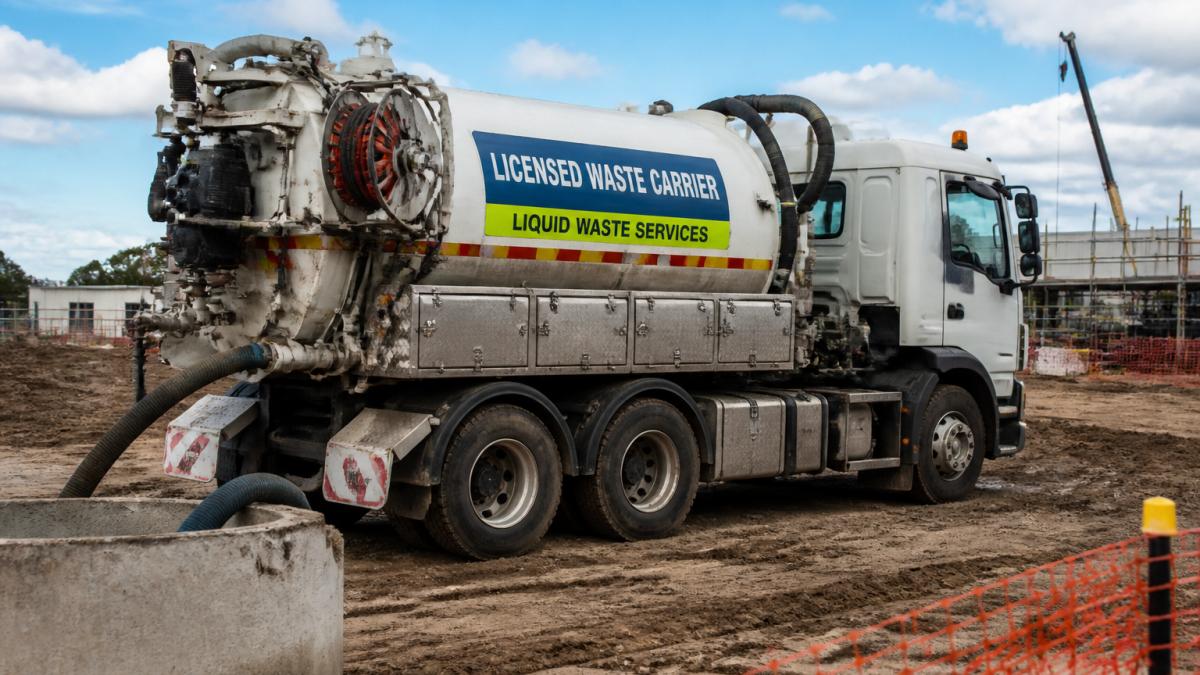
Transporting liquid waste in Western Australia requires specific licences and vehicle specifications. Many businesses trip up here, assuming any truck can haul any waste or hiring unlicensed operators to save money. Both approaches create serious liability.
Carrier and driver licensing requirements
Any business transporting controlled waste must hold a liquid waste transport licence issued by the Department of Water and Environmental Regulation (DWER), a legal requirement under the Environmental Protection (Liquid Waste) Regulations 1996.
Drivers also need specific training and endorsements covering hazardous waste handling, spill response, and documentation. A standard heavy vehicle licence isn't enough. Licensed carriers maintain training records and can prove competency; unlicensed operators cannot.
When you hire a waste removal service, always ask for proof of their transport licence and call DWER to verify it's current.
Vehicle specifications and documentation
Vehicles carrying liquid waste must meet strict specifications: tanks with secondary containment, proper labelling, and safety equipment, plus regular inspection and certification. Documentation travels with the waste, a manifest showing what's being transported, where it came from, and where it's going.
This paperwork is your proof that waste was handled legally. If something goes wrong downstream, contamination, illegal dumping, environmental damage, that manifest chain protects you. Keep copies for at least five years.
Construction site wastewater disposal: compliance workflow
Construction sites generate significant liquid waste: dewatering from excavations, washout water from concrete trucks, dust control runoff, and portable toilet waste. Each stream has different handling requirements, and mixing them creates compliance problems.
Planning and approval requirements
Before construction starts, plan your wastewater management: identify all liquid waste streams on site, estimate volumes, and determine disposal pathways.
The approval process varies by location within Perth and by waste type. A portable toilet pump-out might need no approval beyond hiring a licensed carrier; dewatering from a large excavation might need environmental assessment.
Many projects delay this step, then find themselves mid-project with waste accumulating and no permits. Plan it first, execute second. Approval timeframes vary, so building this into your schedule prevents site shutdowns.
Storage and handling before collection
Liquid waste on site must be stored safely until collection: proper containment, bunded tanks or enclosed areas that catch spills, and protection from weather. Portable toilets need secure placement away from water sources, and wash bay waste needs settling tanks or oil separators before removal.
Labelling is essential: every container should clearly show what it contains and when it was filled. This matters for safety (so workers handle it correctly) and compliance (so the carrier knows what they're collecting).
Storage duration matters too. Some waste can sit for weeks; other waste degrades or becomes hazardous if stored too long. Portable toilet waste shouldn't sit more than a few weeks in warm weather, and oily water separates and becomes harder to handle.
Approved liquid waste disposal facilities Perth and treatment pathways
Not all waste goes to the same place. Different facilities handle different waste types, using different treatment methods. Understanding your disposal options ensures waste goes where it's actually treated, not just moved to another problem.
Finding and verifying licensed disposal sites
Licensed disposal facilities in Perth are registered with DWER and have the equipment and approvals to treat or safely dispose of specific waste types.
Your waste carrier should tell you exactly where waste is going. Ask for the facility name, address, and licence number, and verify it independently with DWER. If a carrier won't say where waste is going, that's a red flag.
Some facilities charge by waste type and volume, others by the tonne. Understanding the cost structure helps with budgeting and ensures waste goes to a legitimate, properly equipped facility rather than being dumped illegally.
Prohibited discharge routes and sewer restrictions
This is where many businesses get it wrong: you cannot discharge controlled liquid waste into standard sewers or stormwater drains. This is prohibited under the Health (Treatment of Sewage and Disposal of Effluent and Liquid Waste) Regulations 1974.
Portable toilet waste cannot go into sewers, oily water cannot go into stormwater, and hazardous waste cannot go anywhere except licensed facilities.
Some older sites have informal arrangements with local councils to discharge certain waste types, but these often aren't current or legally sound.
Waste tracking, documentation and record retention
Compliance isn't just about following rules, it's about proving you did.
Every controlled waste removal should generate a manifest or receipt showing date, waste type, volume, collection location, carrier name and licence, destination facility, and disposal method.
Beyond manifests, maintain records of waste classification decisions, approvals or permits obtained, and communication with disposal facilities. If your site generates significant volumes, log each collection.
Digital record-keeping works well for this. Photograph manifests, store them in a folder organised by date, and back them up.
Permits, approvals and current compliance timeframes
Different waste streams require different approvals. Knowing which apply to your operation prevents delays and compliance breaches.
Portable toilet and holding tank pump-outs generally don't require advance approval, you hire a licensed carrier and they handle it.
Dewatering from excavations often needs approval, especially if water is discharged into a watercourse or stormwater system.
Hazardous waste removal doesn't need advance approval, you hire a licensed hazardous waste carrier and they handle it.
The common thread: don't assume you know what's required.
Common compliance mistakes and how to avoid them
After 18 years in this industry, we've seen the same mistakes repeat.
Mistake 1: Assuming all liquid waste can go down the drain. It cannot.
Mistake 2: Hiring unlicensed operators to save money. If waste is disposed of illegally, you're liable.
Mistake 4: Keeping no records. You need proof that waste was handled legally.
Mistake 5: Storing waste without proper containment. Spills from uncontained storage create environmental damage and regulatory breaches.
Mistake 6: Delaying approvals until the last minute. Approval processes take time.
Liquid waste disposal Perth regulations exist for good reason: protecting water quality and public health.
At Kwinana Site Services, we handle removal and disposal so your team can focus on the work. Whether you need regular portable toilet pump-outs, one-off dewatering removal, or industrial waste disposal, we provide straight quotes with no hidden surprises, and your waste is disposed of properly at licensed facilities. Get a quote from us today and let's keep your site clean and compliant without the fuss.
Frequently Asked Questions
What regulations apply to liquid waste disposal in Perth?
Liquid waste disposal in Perth is governed by the Environmental Protection (Controlled Waste) Regulations 2001, the Environmental Protection (Liquid Waste) Regulations 1996, and the Health (Treatment of Sewage and Disposal of Effluent and Liquid Waste) Regulations 1974. These rules set standards for waste classification, transport, and disposal at approved facilities. The Department of Water and Environmental Regulation oversees compliance. Your specific obligations depend on the waste type and volume your business generates. Most construction and industrial sites need a licensed waste carrier and must use registered disposal sites.
Do I need a licence to transport liquid waste in Western Australia?
Yes. Anyone transporting controlled or hazardous liquid waste must hold a liquid waste transport licence issued by the Department of Water and Environmental Regulation. The carrier must be licensed, and drivers need appropriate endorsements on their driving licence. The vehicle itself must meet specific safety and containment standards, including secondary containment and proper labelling. If you arrange for a licensed carrier to collect waste from your site, the carrier holds the licence, you don't need one as the waste generator, but you must use a licensed operator.
How do I know whether liquid waste is classified as controlled waste?
Controlled waste includes trade waste, industrial effluent, sewage, septic tank sludge, and hazardous chemical liquids. If your business produces liquid waste from manufacturing, maintenance, cleaning, or sanitation services, it's almost certainly controlled waste. Hazardous waste, such as oils, coolants, pesticides, or chemical solutions, requires stricter handling and disposal. The Department of Water and Environmental Regulation provides guidance on waste classification. When in doubt, treat the waste as controlled and arrange disposal through a licensed carrier to ensure compliance.
What records should a business keep after a liquid waste pump-out?
Keep copies of all waste transport documentation, including the carrier's licence details, collection dates, volumes removed, and the disposal facility's receipt or certificate. These records prove compliance and are essential if regulators audit your site. Retain documentation for at least five years. Records should show what waste was collected, where it was taken, and confirmation it reached an approved facility. This tracking protects you legally and demonstrates due diligence if a spill or contamination incident occurs.
Can liquid waste be discharged to a sewer or stormwater drain?
No, most liquid waste cannot be discharged to sewers or stormwater drains without approval. Sewage and effluent have specific treatment pathways, and industrial or trade waste discharge is prohibited without a permit from the local water authority. Discharging hazardous liquids or oils to drains is illegal and can result in significant penalties. All liquid waste must be collected by a licensed carrier and taken to an approved disposal facility. Unauthorised discharge is a serious environmental and legal violation.
Where can businesses dispose of liquid waste legally in Perth?
Liquid waste must be taken to registered disposal sites approved by the Department of Water and Environmental Regulation. These facilities treat or process waste safely before final disposal or reuse. Licensed waste carriers know which sites accept specific waste types and will arrange transport and disposal. Never attempt to dispose of liquid waste at unauthorised locations, it's illegal and carries heavy penalties. Ask your waste carrier for proof that the disposal site is licensed and appropriate for your waste type.
What information should I provide when arranging a bulk pump-out?
Provide the waste type (sewage, trade waste, oily water, etc.), estimated volume, site location, access details, and frequency (one-off or regular). Be honest about what's in the tank, hazardous materials or unknown contents affect pricing and handling. Include site safety information, such as ground conditions, overhead obstacles, and parking availability. The more detail you give upfront, the more accurate the quote and the fewer surprises on the day. Reliable operators will ask these questions before confirming a booking.
How should liquid waste be stored before collection?
Store liquid waste in properly sealed, labelled containers or tanks with secondary containment to prevent spills and ground contamination. Keep hazardous waste separate from non-hazardous waste and protect all storage areas from weather and unauthorised access. Tanks must be structurally sound and regularly inspected for leaks. Do not overfill containers or mix incompatible waste types. Storage areas should be clearly marked and inaccessible to site workers who aren't trained in handling. Proper storage prevents environmental incidents and demonstrates regulatory compliance.