 blog
Industrial Wash Bay Cleaning: A Practical Guide
Table of Contents
- What Industrial Wash Bay Cleaning Involves
- Wash Bay Pit Cleaning and Maintenance
- Handling Oily Water Disposal Properly
- Workshop Coolant Disposal and Best Practice
- Industrial Liquid Waste Removal: Systems and Standards
- Compliance and Environmental Requirements
- Choosing a Wash Bay Cleaning Service
- Frequently Asked Questions
Last Updated: October 16, 2026
What Industrial Wash Bay Cleaning Involves
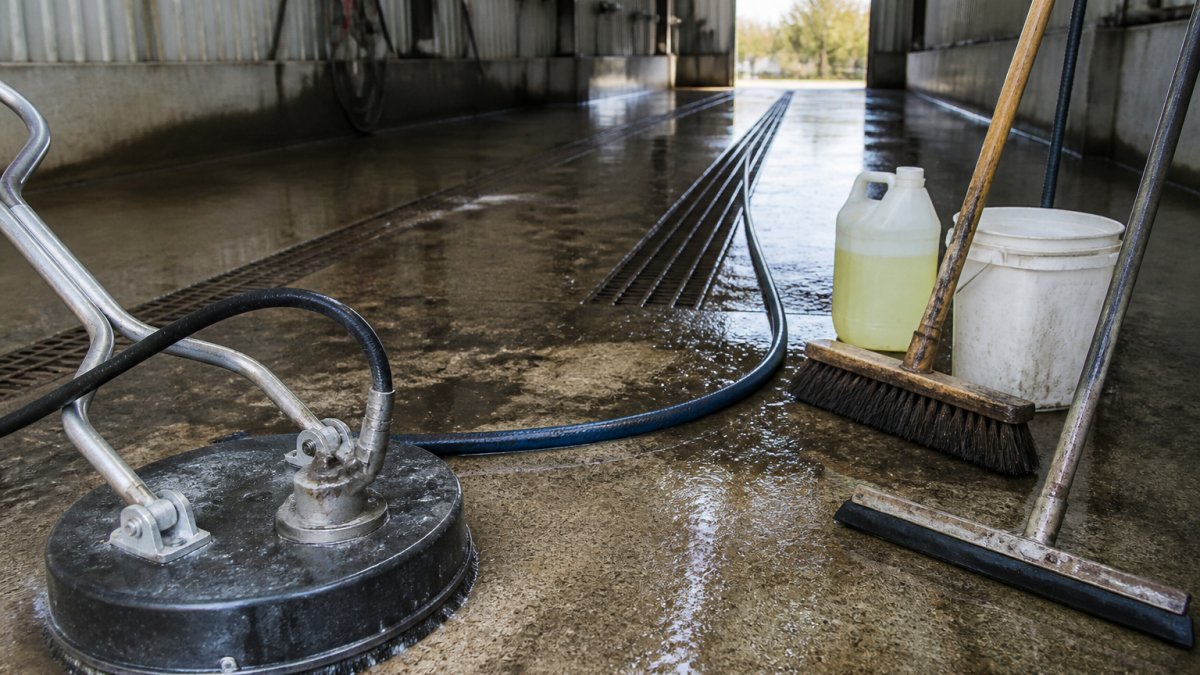
Industrial wash bay cleaning is the process of removing accumulated dirt, oil, grease, and contaminants from wash bays used for vehicle and equipment maintenance. At Kwinana Site Services, we understand that keeping these spaces clean isn't just about appearances, it's essential for safe operations, environmental compliance, and extending the life of your equipment.
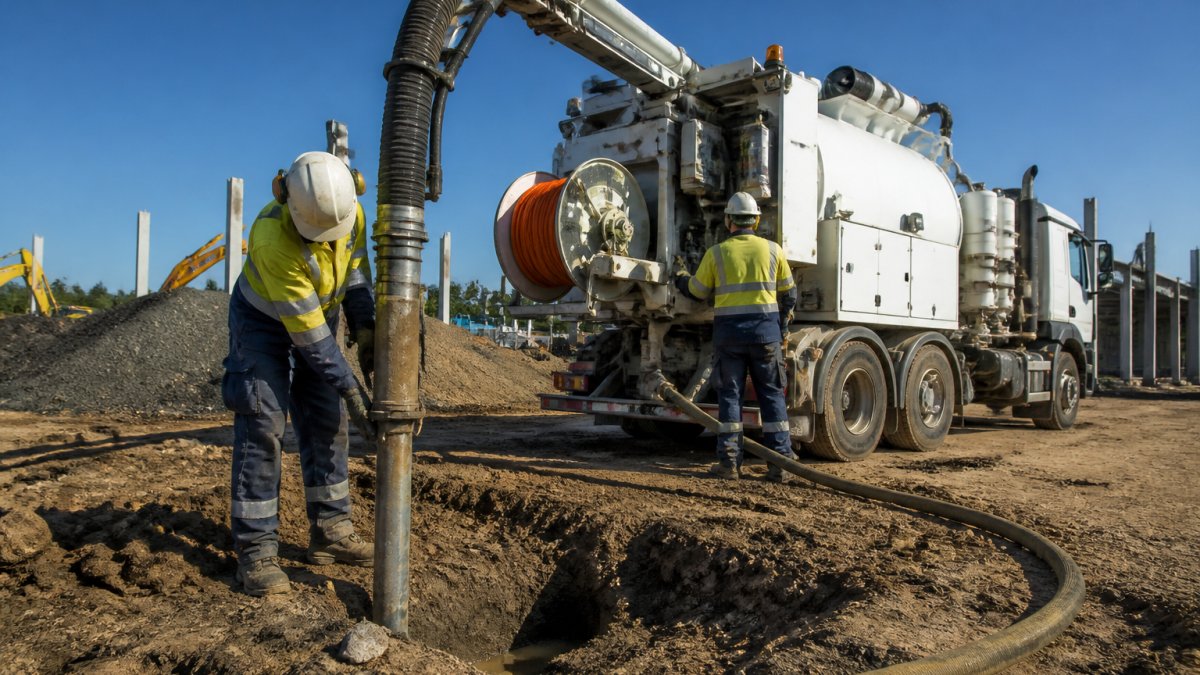
A typical industrial wash bay cleaning job involves several key tasks. Workers remove accumulated sludge and debris from the pit or floor, clean drainage systems to prevent blockages, and dispose of collected waste properly. The work requires specialised equipment and knowledge of how to handle oily water and other hazardous materials safely.
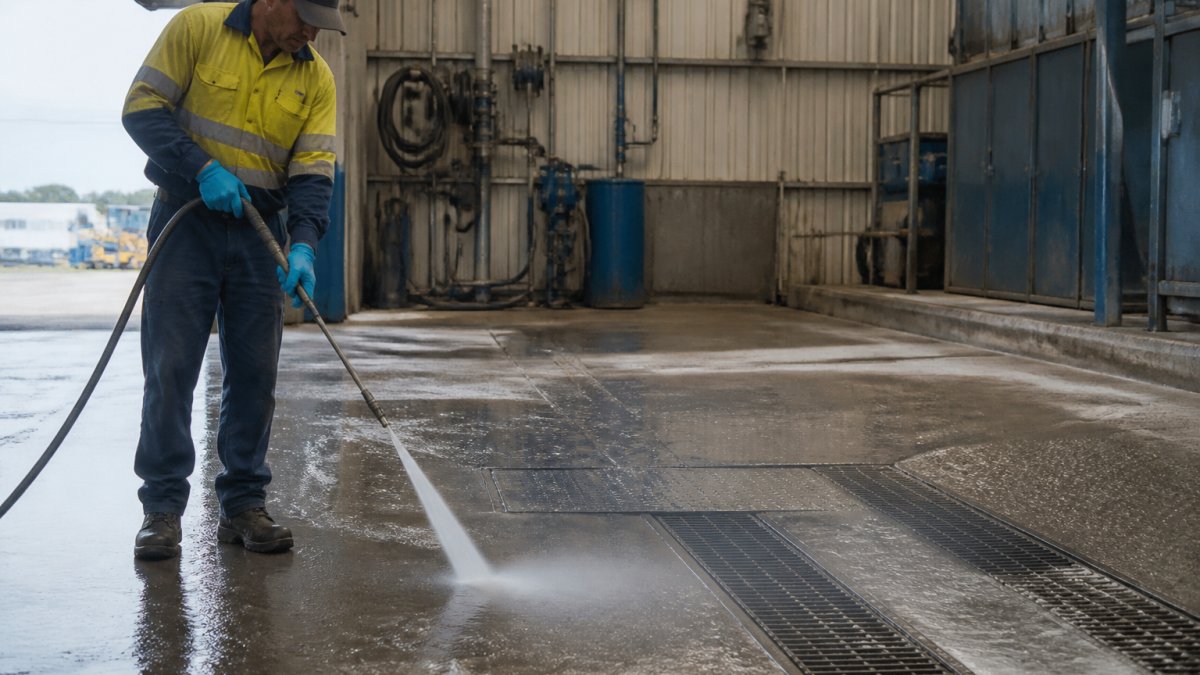
Most facilities need regular industrial wash bay cleaning to maintain operational standards. The frequency depends on how heavily the bay is used. A busy fleet workshop might need weekly attention, while a smaller operation could manage with monthly or quarterly service. Either way, neglecting this work creates safety hazards, environmental risks, and costly equipment damage down the track.
Wash Bay Pit Cleaning and Maintenance
Wash bay pits accumulate solid waste that settles at the bottom over time. This sludge contains oil, metal particles, dirt, and other contaminants that need regular removal to keep the system functioning properly.
Pit cleaning involves pumping out accumulated material, scrubbing pit walls and floors to remove stubborn deposits, and flushing the system with water. The removed sludge must be disposed of as industrial waste, never poured down drains or left to accumulate indefinitely. Proper maintenance prevents blockages that can shut down your entire wash bay operation.
Many facilities overlook pit maintenance until a problem forces their hand. By then, the buildup is worse and cleanup costs more. A preventative approach, regular pump-outs and inspections, keeps costs lower and operations running smoothly.
The pit itself should be inspected for structural damage during each cleaning. Cracks or deterioration can allow contaminated water to seep into surrounding soil, creating environmental and legal problems. If damage is spotted early, repairs are straightforward. If left unaddressed, remediation becomes expensive and time-consuming.
Handling Oily Water Disposal Properly
Oily water from wash bays cannot be treated like standard wastewater. It requires proper separation and disposal to meet environmental standards and avoid regulatory penalties.
Oily water disposal starts with separation. Oil-water separators remove bulk oil and grease, allowing cleaner water to be discharged or recycled. The separated oil is collected as industrial waste and disposed of at licensed facilities. This process protects waterways and ensures your site remains compliant with environmental regulations.
Many workshop operators assume they can simply drain oily water into the sewer system. This is incorrect and creates serious problems. Sewer systems aren't designed for high-oil content water, and discharging it illegally can result in substantial fines and cleanup costs. Proper disposal through licensed facilities is the only legal and responsible approach.
The separated water can sometimes be recycled for further cleaning or dust suppression, reducing overall water consumption. This approach saves money while reducing environmental impact. However, recycled water still requires proper treatment and monitoring to ensure it meets safety standards.
Workshop Coolant Disposal and Best Practice
Workshop coolant is a hazardous waste stream that many facility managers handle incorrectly. Coolant contains metal particles, oils, and additives that make it unsuitable for standard disposal methods.
Proper coolant disposal begins with segregating used coolant from other waste streams. Never mix coolant with oily water, solvents, or other liquids, this complicates treatment and increases disposal costs. Store coolant in clearly labelled containers and arrange regular collection by a licensed waste removal service.
Some workshops attempt to extend coolant life through filtration or settling. While this can delay replacement, eventually all coolant reaches the end of its useful life and must be disposed of properly. Attempting to reuse degraded coolant damages equipment and creates operational problems that cost far more than proper disposal would have.
Licensed disposal facilities can often recover and recycle coolant, reducing the amount that ends up in landfill. This environmental benefit comes at no extra cost to you, it's simply how responsible disposal works.
Industrial Liquid Waste Removal: Systems and Standards
Industrial liquid waste removal requires understanding both the waste types you generate and the regulatory framework governing their disposal. Different waste streams require different handling approaches.
Common industrial liquid wastes include oily water, coolant, hydraulic fluid, solvents, and cleaning compounds. Each has specific treatment and disposal requirements. Mixing them incorrectly can make treatment impossible and increase costs dramatically. Proper segregation at the source, keeping different waste types separate, is the foundation of cost-effective waste management.
A well-designed industrial wash bay includes infrastructure to support proper waste handling. This includes separate collection tanks for different waste types, properly graded floors to direct flow toward collection points, and drainage systems that prevent cross-contamination. If your facility lacks this infrastructure, upgrading it is often cheaper than managing poorly separated waste long-term.
The scale of your operation determines what removal system makes sense. Small workshops might use portable collection containers and regular scheduled pickups. Larger facilities often benefit from permanent tank systems with regular pump-outs. The right system matches your waste volume, space constraints, and budget.
Compliance and Environmental Requirements
Environmental compliance is not optional, it is a legal requirement that protects your business from serious penalties. For wash bay operators, the obligations sit across three layers: Commonwealth environmental law, state environmental protection and waste legislation, and local government trade-waste and planning requirements.
At the Commonwealth level, the Environment Protection and Biodiversity Conservation Act 1999 (EPBC Act) applies where an activity is likely to have a significant impact on a matter of national environmental significance.
At the state level, the primary instrument is the Environmental Protection Act 1986 (WA), administered by the Department of Water and Environmental Regulation (DWER). The Act establishes the concept of 'environmental harm' and imposes a general duty to prevent it.
Trade waste is the layer most wash bay operators interact with daily. In most cases, any liquid discharged to the sewer requires a trade waste agreement with the local water utility, in this state, that is the Water Corporation.
Local government adds a third layer. Councils administer planning approvals, building permits and some environmental health requirements under the Public Health Act 2016 (WA). If you are installing or modifying a wash bay, expect to need a development application and possibly a building permit.
A practical compliance checklist for a wash bay in this state looks like this:
- Confirm whether your site discharges to sewer, stormwater or on-site containment.
- If sewer, apply for a trade waste agreement with the Water Corporation and install pre-treatment to meet the agreed limits.
- If on-site, engage a licensed liquid waste contractor and retain every disposal docket.
- Check whether your local council requires a development approval or waste management plan for the wash bay.
- Keep records of waste characterisation, disposal volumes, contractor licences and maintenance of separators.
- Review your obligations annually, or whenever you change chemicals, vehicles or throughput.
Environmental Protection Act 1986 (WA) Water Corporation trade waste information Department of Water and Environmental Regulation waste guidance
Documentation is the backbone of compliance. Maintain a simple register covering what waste was removed, when, by whom, and where it was disposed of. If a regulator or utility asks questions, a clean paper trail usually resolves the matter quickly.
Choosing a Wash Bay Cleaning Service
Selecting the right wash bay cleaning service makes the difference between reliable operations and costly disruptions.
1. Match the service to your system type. Permanent, portable and containerised wash bays have different cleaning requirements. A permanent pit system needs sump pump-outs, separator servicing and pit-wall scrubbing.
2. Understand the cost drivers before you compare quotes. Pricing for industrial wash bay cleaning is driven by:
- Pit or sump volume and sludge depth (measured in cubic metres).
- Number of oil-water separators and their capacity.
- Whether waste is classified as liquid, sludge or hazardous.
- Distance to the licensed disposal facility.
- Frequency, scheduled maintenance is materially cheaper per visit than emergency call-outs.
- Access constraints (confined space entry, height, traffic management).
Ask each provider to break their quote into labour, equipment, transport and disposal fees. A single lump sum hides where the real cost sits and makes like-for-like comparison impossible.
3. Compare lifecycle cost, not just the invoice. A cheap clean that leaves sludge in the pit, or that skips separator servicing, pushes cost into the future as emergency pump-outs, blocked drains or environmental incidents. A useful comparison looks at:
- Cost per clean versus cost per year at your expected frequency.
- What is included (pit, separators, pipework, recycled-water tank, filters).
- What triggers an extra charge (excess sludge, hazardous classification, after-hours work).
- Whether the provider includes a written service report and disposal dockets.
4. Verify licensing and disposal chain. Ask for the provider's waste carrier licence, the name and location of the licensed disposal facility, and a sample disposal docket. A legitimate operator will provide these without hesitation.
5. Check experience with your waste types. Oily water, coolant, hydraulic fluid, solvents and cleaning compounds each behave differently.
6. Confirm capacity and response times. If your operation grows, or you need an urgent clean after a spill, can the provider scale?
7. Insist on documentation. Every visit should produce a service report listing what was cleaned, volumes removed, disposal facility and docket number.
A simple selection checklist:
| Factor | What to Look For | Why It Matters |
|---|---|---|
| System fit | Experience with your pit, separator or containerised unit | Prevents damage and missed components |
| Cost transparency | Itemised quote: labour, equipment, transport, disposal | Enables true like-for-like comparison |
| Lifecycle view | Cost per year, inclusions, extra-charge triggers | Avoids cheap-now, expensive-later decisions |
| Licensing | Waste carrier licence and named disposal facility | Protects your business from liability |
| Waste-type experience | Proven handling of oily water, coolant, solvents | Ensures safe, compliant disposal |
| Capacity | Fleet size, after-hours cover, response time | Supports growth and emergencies |
| Documentation | Service report and disposal dockets every visit | Evidence of compliance and trend data |
Kwinana Site Services brings 18 years of Western Australian experience to every job. We handle industrial wash bay cleaning across the metropolitan area with itemised quotes, reliable scheduling, and disposal at licensed facilities.
Frequently Asked Questions
How often should an industrial wash bay be cleaned?
Frequency depends on usage volume and the type of contaminants. High-use operations with heavy equipment may need pit pumping every 2-4 weeks, while lower-throughput workshops might manage quarterly or biannual service. Regular visual inspection of water clarity and sediment accumulation guides scheduling. Neglecting routine cleaning leads to drain blockages and regulatory non-compliance.
What's the proper way to handle oily water disposal?
Oily water must be separated from solids using an oil-water interceptor or similar treatment system before discharge or disposal. Never pour it down standard drains. Collected oily water must be transported by a licensed waste contractor to an approved treatment facility. Proper disposal protects waterways and keeps your operation compliant with environmental regulations.
Can workshop coolant go through a wash bay drain?
No. Workshop coolant is classified as hazardous waste and requires specialist disposal. Pouring it into a wash bay or standard drain violates environmental law and creates liability. Coolant must be collected separately and disposed of through a licensed waste removal service that handles industrial liquid waste. This protects your business and the environment.
How do I choose a reliable wash bay cleaning and waste removal service?
Look for providers with verifiable experience in your industry, transparent pricing with no hidden charges, and proven track record of on-time service. Confirm they hold the proper licenses and dispose of waste at approved facilities. Ask for references from sites similar to yours. A reliable service provider will give you a straightforward quote, show up when promised, and handle hazardous waste responsibly.
The bottom line: Industrial wash bay cleaning is essential maintenance that protects your operations, staff safety, and environmental compliance. Choosing a reliable, experienced service provider removes the headache and ensures the job is done properly every time. At Kwinana Site Services, we've built our reputation on showing up, doing the work right, and disposing of waste responsibly. Contact us for a straightforward quote and reliable service you can count on.