 blog
Emergency Liquid Waste Callout: Perth Response Guide
Table of Contents
- What Counts as a Liquid Waste Emergency on Site
- Liquid Waste Spill Response: Immediate Steps
- How Quickly an Urgent Liquid Waste Pump Out Arrives
- Emergency Pump Out Cost: What Affects Your Quote
- Liquid Waste Disposal Requirements and Compliance
- Preventing Liquid Waste Emergencies Before They Happen
- Choosing a Reliable Emergency Callout Provider
- Frequently Asked Questions
Last Updated: October 19, 2026
What Counts as a Liquid Waste Emergency on Site
A liquid waste emergency means containment has failed and your site risks environmental contamination, regulatory breaches, or operational shutdown. We respond to genuine emergencies where immediate action prevents damage to your operation and the environment.
Overflow and spill situations
Overflow happens when a tank or portable system exceeds capacity faster than expected, often on construction sites where weather, unexpected activity, or miscalculated daily volumes push systems past their limits. A spill is an uncontrolled release onto the ground or into stormwater systems.
Both demand immediate containment: stop further release and prevent spreading. Environmental protection legislation requires you to report significant spills and prevent contamination of waterways or soil.
Burst pipes and tank failures
Burst pipes deliver sudden, large-volume releases when a high-pressure line ruptures or corrosion gives way. Tank failures happen when structural integrity fails through cracks, seam separation, or complete rupture, releasing the entire contents in moments.
Tank failures are particularly serious because the volume is substantial. A burst hot-water system or failed holding tank can release thousands of litres in minutes, creating immediate hazard to personnel and the environment.
Contamination and hazardous spills
Some waste streams are more dangerous than others. Oily water from wash bays, coolant from machinery maintenance, or chemical residues require different handling than standard wastewater. A hazardous spill means the waste itself poses direct risk, toxicity, flammability, or reactivity.
These situations demand specialist response. Standard pump-out equipment isn't appropriate for all waste types, and improper handling creates legal liability. Licensed facilities can handle hazardous material safely; unlicensed operators can't.
Liquid Waste Spill Response: Immediate Steps
When an emergency liquid waste callout becomes necessary, your first actions determine whether the situation gets contained or escalates. Speed matters, but so does doing the right things in the right order.
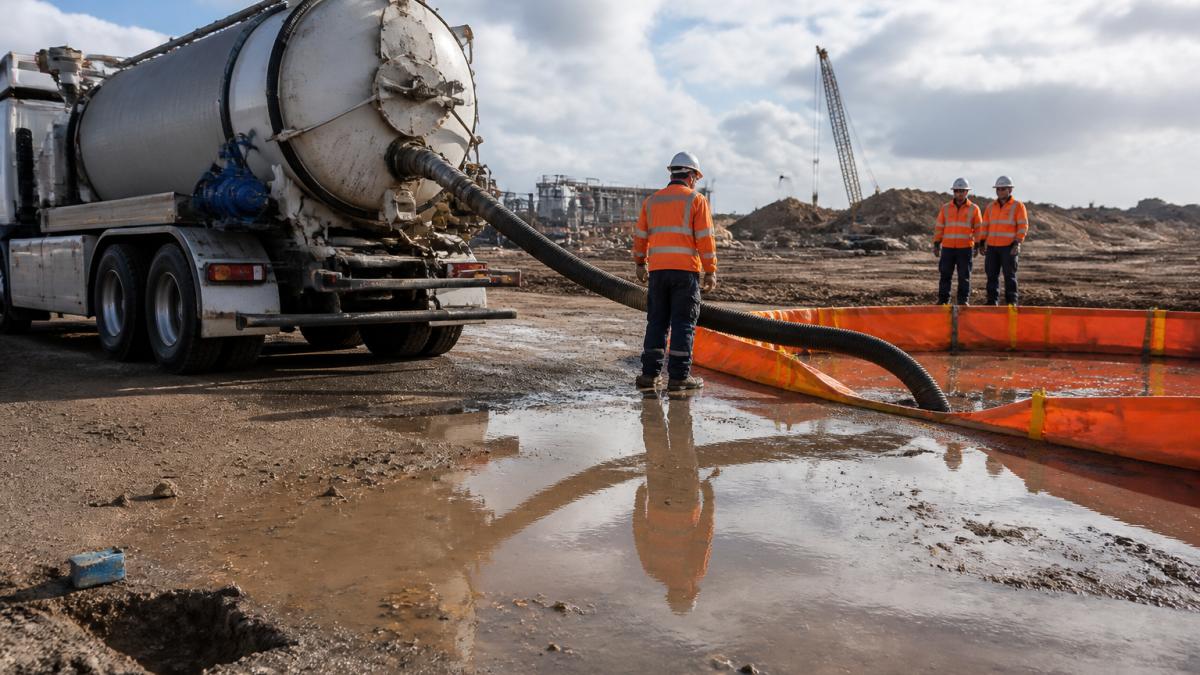
Safety first: containment and site access
Stop the source immediately if it's safe: shut the valve, stop the pump.
Next, prevent spread using barriers, sandbags, spill kits, or excavated trenches.
Clear personnel from the immediate area: spills can create slip, vapour, or contamination hazards. Keep people back until the situation is under control.
Information you need ready for the callout
When you ring for an emergency liquid waste callout, have these details ready. They determine response time, equipment required, and disposal method.
What type of waste is it? Portable toilet waste, greywater, oily water, coolant, or something else?
How much has been released? An estimate of volume helps dispatch the right truck size.
Where exactly is it?
Is anyone injured or exposed? This changes everything. If there's a health risk, emergency services may need to attend first.
How Quickly an Urgent Liquid Waste Pump Out Arrives
Response time is the measure that matters in emergencies. You need to know whether help arrives in hours or days.
Same-day and after-hours response
Genuine emergencies don't respect business hours. A burst tank at midnight on Sunday creates the same environmental risk as one at 2pm on Wednesday.
Reliable providers maintain after-hours callout capability: vehicles and operators available outside standard hours.
Same-day response means the truck arrives within hours of your call, not days later. For spills and overflows, hours matter. Environmental contamination accelerates once release occurs.
What affects response time
Distance from the depot influences arrival time: a site 10 kilometres away gets faster response than one 50 kilometres out.
Complexity of access matters too: a site with clear access gets faster response than one requiring excavation, obstacle removal, or navigation of complex layouts. Communicating access requirements upfront helps the operator plan and arrive properly equipped.
Equipment availability affects response time. If the provider's trucks are all deployed, you wait for one to finish its previous job.
Emergency Pump Out Cost: What Affects Your Quote
Cost concerns often delay calling for help, as site managers worry about surprise bills and hidden charges. Understanding what determines cost removes that barrier to deciding fast.
The main cost drivers
Most emergency liquid waste callouts are priced on a combination of the following. Ask for each to be itemised before you approve attendance.
- Callout or attendance fee. A fixed charge for mobilising a truck and operator, often higher outside standard business hours, on weekends and on public holidays.
- Volume removed. Charged per litre or per 1,000 litres, with a minimum charge that applies even to small spills. A 500-litre spill may attract the same minimum as a 2,000-litre job.
- Waste type and disposal gate fees. Standard wastewater, portable toilet waste, grease trap waste, oily water, coolant and chemical waste are accepted at different rates by licensed facilities. Hazardous or contaminated loads attract higher disposal charges because they need specialist treatment.
- Travel distance. Sites close to the depot attract lower travel charges than remote or regional sites. Some providers quote a travel allowance rather than a per-kilometre rate.
- Access and equipment. A spill reachable by a standard vacuum truck is cheaper than one requiring long hose runs, confined-space entry, excavation, traffic management or a smaller specialist vehicle.
- Urgency and time on site. After-hours attendance, standby time and extended pumping all add cost. A straightforward pump-out may take under an hour; a complex containment and recovery job can take most of a day.
What a straight quote should include
Before the truck arrives, confirm:
- the callout fee and whether it changes after hours;
- the per-litre or per-load rate and any minimum charge;
- the disposal fee for your specific waste stream;
- travel charges and any access surcharge;
- what happens if the volume is larger than estimated.
Why cheap callouts cost more
An unlicensed or under-insured operator may quote less because they aren't paying licensed disposal fees or carrying proper environmental cover. If waste is dumped or disposed of unlawfully, liability can follow it back to your site, and the callout saving is trivial compared with cleanup orders, enforcement action or reputational damage. Price the job on total cost: attendance, removal, lawful disposal and documentation.
Budgeting for emergencies
Sites relying on portable toilets, grease traps, wash bays or holding tanks should budget an annual contingency for emergency callouts. Scheduled pump-outs reduce emergency frequency, but no maintenance regime eliminates every burst pipe or tank failure. Knowing the likely cost range in advance stops cost anxiety from delaying the call.
Liquid Waste Disposal Requirements and Compliance
Liquid waste disposal isn't discretionary. Regulations exist, and they apply to your site. Proper disposal protects the environment and protects you from enforcement action.
Licensed facilities and environmental protection
Liquid waste must be disposed of at licensed facilities. These facilities meet environmental protection standards, treat waste appropriately, and prevent contamination of soil and water systems.
Licensed operators work exclusively with licensed facilities. They maintain records of where waste goes, what happens to it, and how it's treated.
Environmental protection is the point. Wastewater contains organic matter, nutrients, and sometimes hazardous substances. Uncontrolled discharge into waterways causes algal blooms, oxygen depletion, and contamination of drinking water sources.
Documentation and site records
Keep records of every pump-out and emergency callout. Documentation shows you're managing liquid waste responsibly. If a regulator audits your site or questions your environmental practices, records demonstrate compliance.
The waste removal provider should supply documentation, docket numbers, dates, volumes removed, waste type, and destination facility. File these records on site.
Preventing Liquid Waste Emergencies Before They Happen
Prevention beats emergency response every time. Regular maintenance and monitoring stop most emergencies before they start.
Regular maintenance and tank monitoring
Inspect tanks and systems regularly. Look for cracks, corrosion, leaks, or structural degradation. Early detection of problems allows planned maintenance before failure occurs.
Monitor fill levels actively. Don't wait until a tank is completely full before arranging pump-out. Overfull tanks overflow.
Test pipes and connections periodically. Corrosion and fatigue cause failures. A burst pipe delivering sudden release is preventable if you've identified weakening sections and replaced them before rupture.
Scheduled pump-outs vs. emergency callouts
Scheduled pump-outs are planned, predictable, and cost-effective. You arrange removal before capacity is reached, avoiding overflow.
Emergency callouts cost more because they're unplanned. The provider mobilises urgently, potentially pulling equipment from other jobs. The waste may require specialist handling because it's mixed or contaminated.
The mathematics are simple: scheduled maintenance costs less and causes less disruption than emergency response. Prevention isn't just about environmental compliance, it's about operational continuity and cost control.
Choosing a Reliable Emergency Callout Provider
When an emergency liquid waste callout is necessary, you're trusting the provider with your site's environmental compliance, safety, and reputation. The provider you choose matters. Use the checklist below before you need it, not during the spill.
Verify licensing, approvals and insurance
Ask for evidence, not assurances. Confirm:
If a provider cannot produce these on request, treat that as a warning sign. Unlicensed operators create legal exposure that stays with your site.
Check equipment and waste-type capability
Not all equipment handles all waste types. Ask what the provider can actually handle:
- vacuum tankers and pump capacities, including whether they can reach your spill location;
- separate capability for hazardous, oily or chemical waste;
- disposal partnerships with multiple licensed facilities, so a load is not turned away because one facility cannot accept it.
Test responsiveness before the emergency
Response time starts with someone picking up the phone. Before you rely on a provider, call their after-hours number and see what happens. Ask:
- Is the phone answered by a person outside business hours?
- What is the realistic attendance window for your site location?
- Are trucks and operators based locally, or dispatched from another region?
- What information do they need at the time of the call?
A provider that routes you to voicemail at 3am is not an emergency provider.
Ask for references and disposal records
Ask for references from construction, industrial or commercial sites similar to yours. A provider with genuine experience handling emergencies on active sites has solved problems you might face. Also ask to see a sample disposal docket showing the facility, date, volume and waste type.
Red flags
- No after-hours contact or a call-back-only service.
- Quotes that exclude disposal fees or refuse to itemise.
- No evidence of licensing, approvals or insurance.
- Reluctance to name the disposal facility.
Choosing well is a pre-emergency task. A short verification conversation now prevents a much longer compliance conversation later.
Frequently Asked Questions
What counts as a liquid waste emergency on a worksite?
An emergency liquid waste callout is needed when a tank overflows, a pipe bursts, or hazardous spills occur that risk site contamination or environmental harm. Sewage overflow, septic tank failure, burst hot-water systems, and oily water spills from wash bays all qualify. If waste is pooling where it shouldn't be or poses a safety risk, contact an emergency callout service immediately rather than waiting for a scheduled pump-out.
How quickly can an emergency liquid waste pump out respond?
Response times depend on location and current demand, but most urgent liquid waste pump out services offer same-day callouts and after-hours availability. Rural areas may take longer than metropolitan sites. When you call, provide your exact location, waste type, and tank volume so the operator can give you a realistic timeframe. Weekends and public holidays may affect availability.
What should I do before a liquid waste contractor arrives?
Stop using the affected system immediately to prevent further overflow. Identify and mark the problem area clearly, and ensure safe access for the vacuum truck and tanker equipment. Keep bystanders away from spills and contaminated areas. Have information ready: tank location, approximate waste volume, waste type (sewage, oily water, septic waste), and any hazardous materials. Clear vehicle access routes so the contractor can position equipment quickly.
What affects the cost of an emergency liquid waste callout?
Emergency pump out cost varies based on waste volume, waste type (hazardous waste costs more), site access difficulty, and after-hours timing. Small jobs and large industrial spills are priced differently. Disposal facility location and distance also factor in. Straightforward quotes from reputable providers itemise these factors, ask for a breakdown so there are no hidden fees. Regular scheduled pump-outs typically cost less than emergency callouts.