 how-to
How to Avoid Site Waste Management Delays
Last Updated: October 30, 2026
Quick Summary
Avoiding waste management delays starts with a written construction site waste management plan that names each waste stream, an owner, storage spots and collection triggers before day one. Size bins to each stage's peak week, book pump-outs around headcount, and keep access lanes clear for trucks.
- Assign one person to own waste coordination, with a named backup for leave and night shifts.
- Book a pick-up when the bin is two-thirds full, not when it is full.
- High-traffic sites need weekly or more frequent pump-outs; smaller crews can run fortnightly with a call-for-pickup backup.
- Walk the truck route and check the swept path at every turn before the first collection.
- Record three fields per load: waste stream, volume and disposal facility.
Table of Contents
- Why Waste Management Delays Happen on Construction Sites
- Building a Construction Site Waste Management Plan That Prevents Delays
- Construction Waste Recycling Requirements You Cannot Skip
- Bulk Pump-Out Scheduling for Liquid Waste Streams
- Logistics, Site Access and Physical Control Measures
- Automated vs Manual Scheduling: A Cost-Benefit View
- Digital Waste Tracking and Sustainability Reporting
- Book Reliable Waste Collections for Your Site
- Frequently Asked Questions
Why Waste Management Delays Happen on Construction Sites
Most site hold-ups blamed on weather or trades actually trace back to waste. Full bins and missed pump-outs stall jobs across Perth, and the pattern rarely changes.
Here is what goes wrong most often:
- No nominated owner. Everyone assumes someone else booked the pick-up.
- Bins fill faster than planned. Bulk waste and rubble pile up during fit-out.
- Access blocks the truck. Parked utes and stored materials cut off the skip.
The real problem is not the waste itself. It is that waste removal runs on its own timetable, and nobody builds that timetable into the project program.
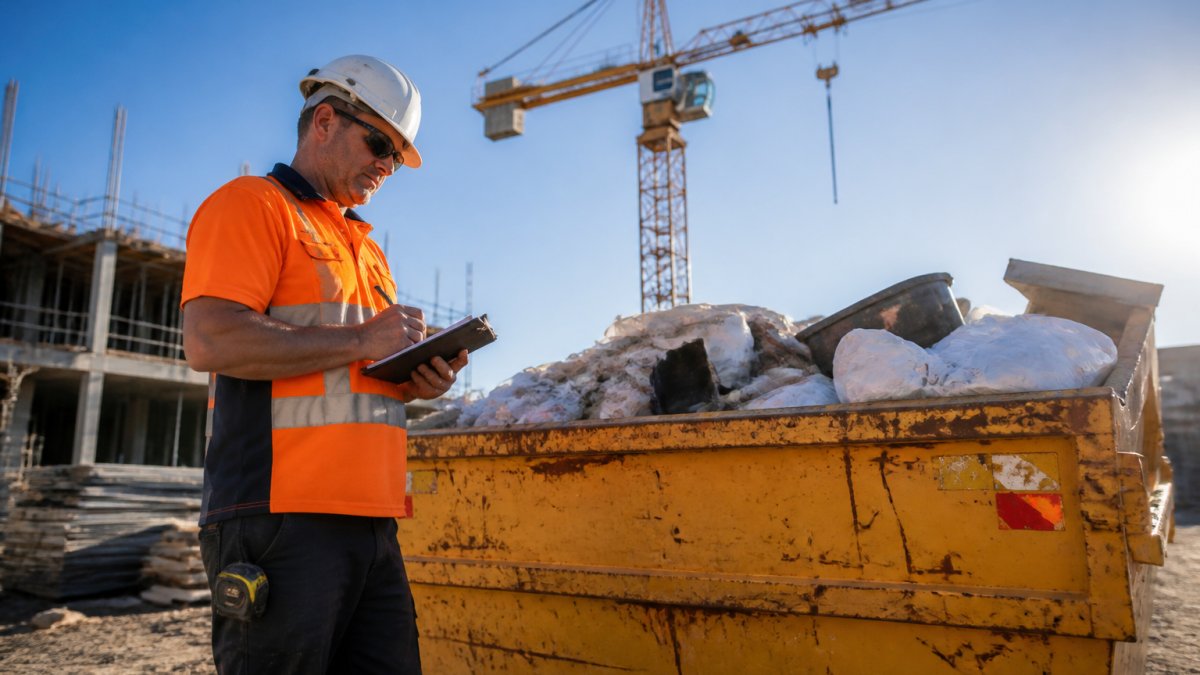
Building a Construction Site Waste Management Plan That Prevents Delays
A construction site waste management plan is a written schedule that names each waste stream, who manages it, where it is stored and when it leaves site. Get it in writing before day one. The difference between a plan that prevents delays and one that sits in a site folder is specificity: volumes per stage, bin sizes matched to those volumes, named triggers for extra pick-ups, and a review point each time the program shifts.
What Goes Into the Plan
Keep it short and practical, but make every line actionable:
- List every waste stream: general waste, green waste, rubble, metals, liquid waste, and any hazardous streams such as asbestos-containing material or contaminated soil.
- Assign one person to own waste coordination, with a named backup for leave and night shifts.
- Map on-site storage spots away from access routes, laydown zones and crane slew zones.
- Set collection frequencies and call-for-pickup triggers (for example, "book when the bin is two-thirds full", not "book when full").
- Record where each load goes for disposal, including the licensed facility name and EPA/regulator reference where relevant.
- Note the review cadence: revisit the plan at each stage gate (demolition to structure, structure to fit-out) and whenever the program changes.
Waste Volume Management and On-Site Storage
Estimate volumes per stage, not per project. A demolition phase produces far more rubble removal than a fit-out, and a fit-out produces more packaging and general waste than a structure phase. Match bin sizes and skip hire to each stage so you are not paying for empty space or overflowing bins.
A workable method most practitioners use:
- Break the program into stages (demolition, excavation, structure, services, fit-out, handover).
- Estimate a volume range per stage from past jobs or supplier guidance, and record the assumption in the plan.
- Size bins to the peak week of each stage, not the average, then add a call-for-pickup trigger for spikes.
Plan Review and Handover
A waste plan that is never reviewed becomes a source of delays rather than a defence against them. Build two review points into the program: one at each stage gate, and one whenever a variation changes the scope or the program. At handover, the same records that satisfied the plan become the evidence trail for clients, auditors and development application conditions.
Construction Waste Recycling Requirements You Cannot Skip
Meeting construction waste recycling requirements is not optional, and it is where compliance and scheduling collide. Under Australian environmental law, waste must go to a licensed facility, and hazardous streams need proper handling. Check the Department of Water and Environmental Regulation guidance for what applies to your site.
Segregation, Landfill Diversion and Compliance
Sort at the source. Separate green waste, metals, rubble and general waste into labelled bins. Good segregation makes diversion easier later. Keep records of every load, because development applications and audits often ask for them.
Liquid waste is the stream most sites forget. Oily water from wash bays and separators cannot go down the drain. Our wash bay and oil separator cleaning service is listed on our site.
Bulk Pump-Out Scheduling for Liquid Waste Streams
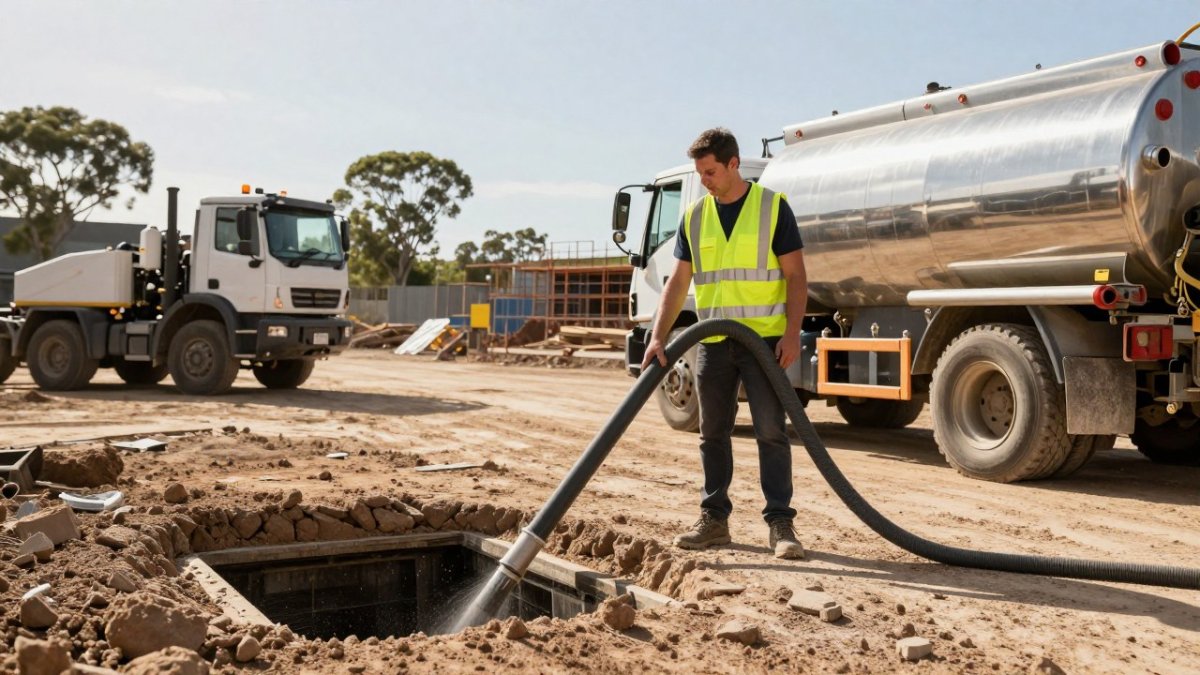
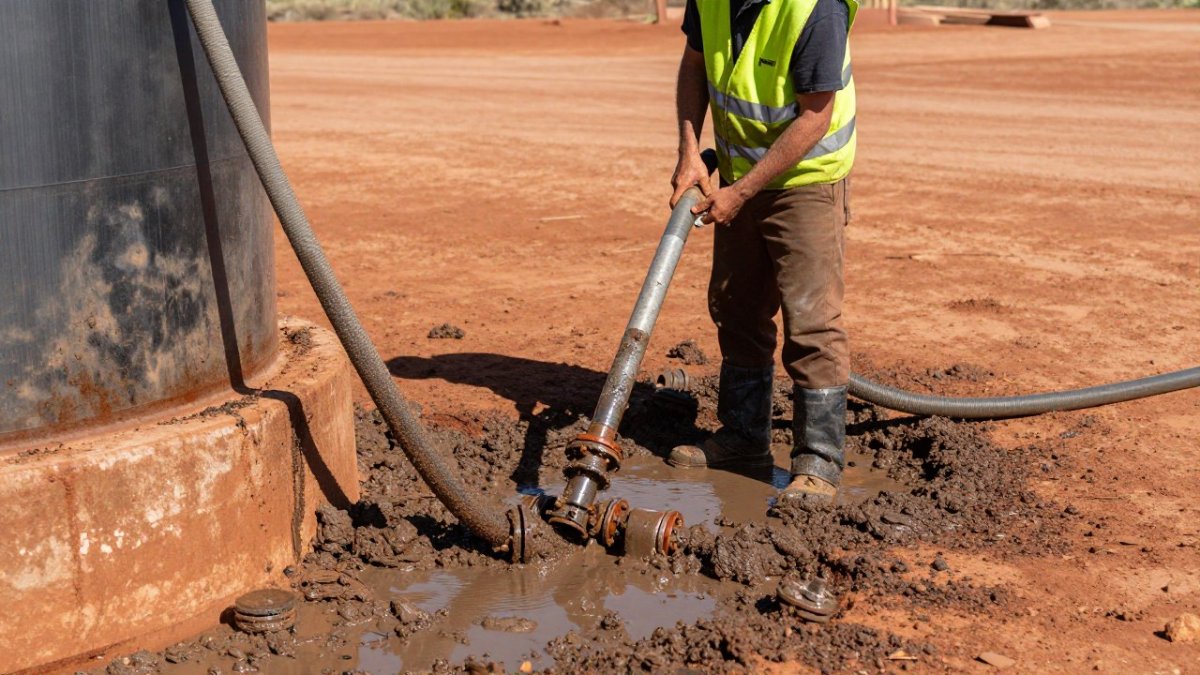
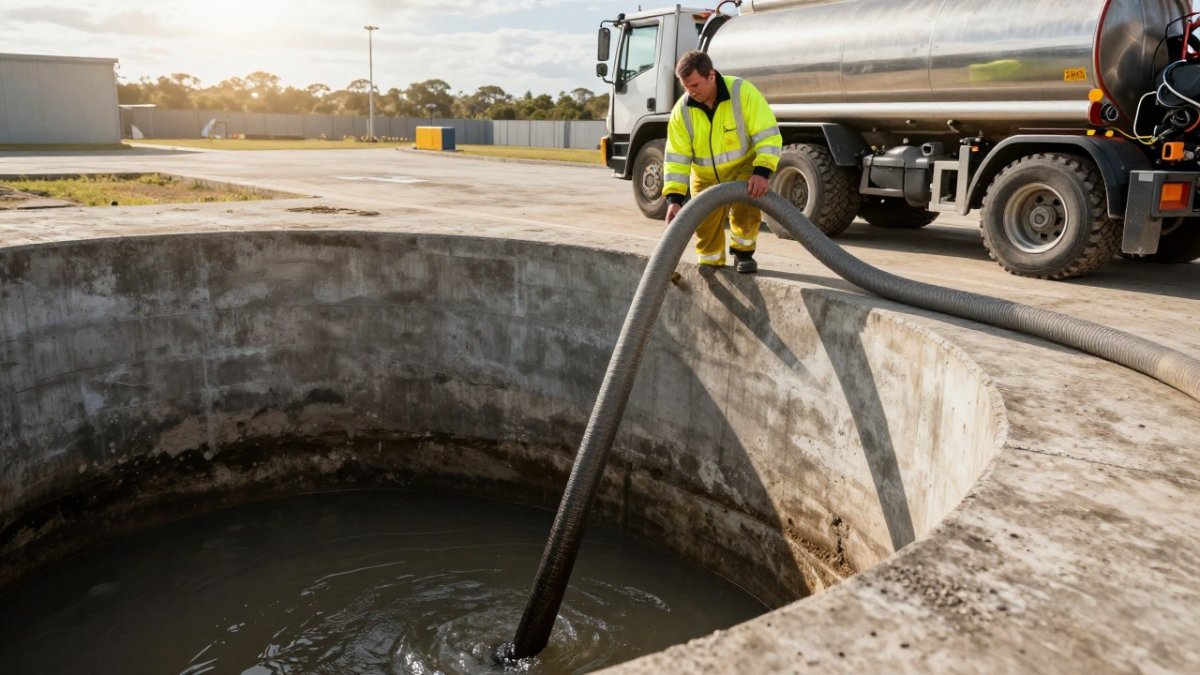
Liquid waste is the quiet delay-maker. A full holding tank or overflowing portable toilet stops work fast, and no one wants to be the site manager who let it happen. Bulk pump-out scheduling fixes this by locking in regular runs before tanks hit capacity.
Set the schedule around headcount and usage:
- High-traffic sites: weekly or more frequent pump-outs.
- Smaller crews: fortnightly runs with a call-for-pickup backup.
- Events: pre-booked pump-outs before, during and after.
We run regular or one-off jobs, so a small workshop with one tank every couple of months is just as welcome as a major industrial site. For planned works, see our site toilet and holding tank pump outs, or arrange industrial liquid waste removal for coolant, sludge and oily water.
Watch out: skipping a scheduled pump-out to save a booking rarely saves anything. An overflow means emergency callouts, cleanup and lost hours.
Logistics, Site Access and Physical Control Measures
Trucks that cannot get in cannot empty anything. Site access is a waste problem as much as a traffic one. Plan it early and the rest follows. The part that actually prevents delays is sequencing collections around the site's daily rhythm and having a plan for when access or weather fails.
Lock Down the Physical Controls
- Dust suppression on rubble and stockpiles, especially before collection so the load does not shed fines on the road.
- Bunding around fuel and chemical storage, sized to contain a spill from the largest container.
- Wheel wash at the exit to keep roads clean and avoid council or regulator attention.
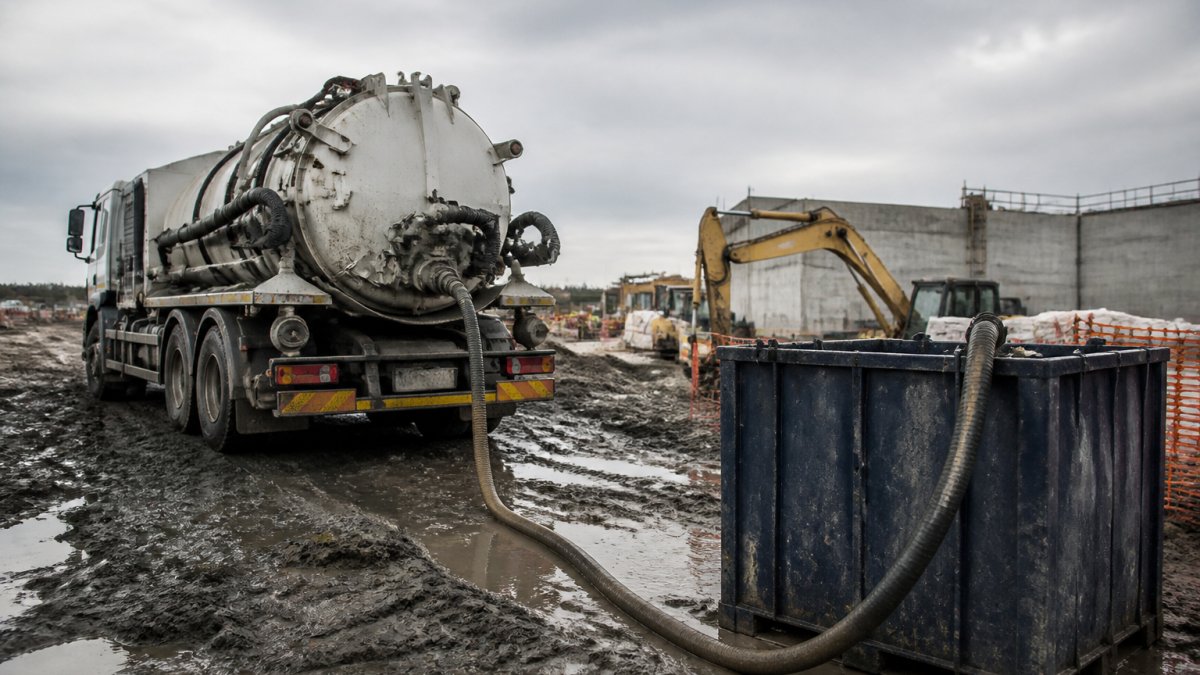
- Clear access lanes wide enough for vacuum trucks and skip vehicles, with turning circles checked against the largest vehicle that will visit.
Swept-Path and Collection Sequencing
Before the first collection, walk the route the truck will take and check the swept path at every turn. A lane that looks wide enough for a ute often is not wide enough for a rear-lift or vacuum truck with a hose reel. Two practical steps:
- Agree a collection window with the provider and the site team, for example, before the 7am trade start or after the afternoon concrete pour, so collections do not compete with deliveries for the same gate.
- Sequence deliveries and collections on the same daily plan. If a concrete truck and a skip truck are both booked for 8am, one of them is waiting, and waiting trucks cost money.
Coordinate material delivery coordination with waste collections so trucks are not competing for the same gate. When access is tight or digging near services is risky, our hydro excavation and vacuum truck hire is available for site projects.
When Access or Weather Fails
This is the scenario most guides skip. Heavy rain, wind, or an access blockage can stop a collection at short notice, and the site still fills up. Build a contingency into the plan:
- Nominate an alternate collection point on site, agreed with the provider in advance.
- Hold a spare bin or bag capacity for wet-weather weeks, when rubble and green waste get heavier and harder to handle.
- Pre-book a catch-up collection after forecast severe weather rather than waiting for the bin to overflow.
- Record the trigger in the plan: for example, "if access is blocked at the booked time, call the provider before 9am and redirect to the alternate point".
Automated vs Manual Scheduling: A Cost-Benefit View
Many sites still schedule waste by phone and memory. Here is a comparison.
| Factor | Manual Scheduling | Automated Scheduling |
|---|---|---|
| Setup effort | None | Some upfront setup |
| Missed pick-ups | Common under pressure | Rare, reminders built in |
| Scaling across sites | Hard to track | Central view |
| Best for | Single small sites | Multi-site operations |
Manual scheduling can suit a small workshop with one tank, while several sites may benefit from a more structured approach.
Digital Waste Tracking and Sustainability Reporting
Waste tracking is moving from paper dockets to digital logs. A simple spreadsheet still beats nothing, but dedicated tools now record each load, its stream and its destination. That data feeds sustainability reporting, which more clients and tenders now request.
Start with three fields per load: waste stream, volume and disposal facility. Add landfill diversion figures as you go. Reliable records also make environmental compliance checks far less painful. The National Waste Policy Action Plan sets the direction for diversion targets, and clean data helps you show progress against them.
Book Reliable Waste Collections for Your Site
The simplest way to avoid waste management delays is to work with a provider that turns up when promised. At Kwinana Site Services we offer straight quotes with no hidden surprises, licensed disposal, and regular runs or one-off jobs.
You can get a quote for your job. Tell us about your sites and volumes so we can quote a collection schedule.
Frequently Asked Questions
What are the most common causes of construction waste removal delays?
The usual culprits are missed or late collections, poor site access for trucks, overflowing skips because volumes were underestimated, and waste that was never segregated so it cannot be diverted. Liquid waste adds another layer: if bulk pump-out scheduling is not locked in, holding tanks and portable toilets overflow and work stops. Most waste management delays trace back to planning gaps rather than bad luck, which means they are preventable with a proper construction site waste management plan and a provider that turns up when promised.
What are the legal requirements for construction waste disposal in Western Australia?
Construction waste in WA is regulated under state environmental legislation, with reporting obligations administered by the relevant state agency. Development applications often carry conditions about waste storage, dust suppression and bunding. Waste must go to a licensed facility, and you should keep records of where each waste stream went. Check your local council and DWER requirements for your specific project, and confirm your provider disposes of everything at licensed, environmentally friendly facilities.
How much do waste management delays actually cost a construction project?
Delays cost money in several ways: idle labour, crane and equipment hire still running, extended site overheads, and knock-on trades pushed back. A single missed pump-out can shut down amenities and send workers home. Rather than guess at a figure, track your own site: log every collection miss, the hours lost and the trades affected for a month. That number usually justifies the cost of scheduled, reliable collections and a clear construction site waste management plan many times over.
Can a small workshop get scheduled pump-outs, or is it only for big sites?
Small jobs are worth doing properly. A workshop emptying one tank every couple of months still needs a licensed disposal trail for oily water and coolant, and a missed visit can shut a wash bay down. Ask any provider upfront whether they take smaller runs and whether the quote is fixed with no hidden fees. Ask whether a provider can scale from a single tank to multiple sites.
Waste delays are a scheduling problem, not a rubbish problem. If missed pick-ups and overflowing tanks are costing you days, Kwinana Site Services can help with reliable pump-outs, licensed disposal and straightforward quotes. Get started with Kwinana Site Services and keep your site clean, compliant and on schedule.