 how-to
How do you find and hire small site liquid waste services?
Last Updated: October 26, 2026
Quick Summary
Small site liquid waste services handle removal and disposal of liquid waste from construction sites, events, industrial facilities, and small businesses, collecting everything from portable toilet waste to oily water, coolant, and sludge, then transporting it to licensed facilities for proper treatment and disposal.
- Gather waste type, volume, frequency, site access details, and collection schedule before requesting quotes.
- Construction sites may generate portable toilet waste, concrete washout water, site runoff, and equipment maintenance residue.
- Verify that your provider disposes of waste at licensed facilities to ensure legal compliance.
- Evaluate providers on reliability, on-time collection track record, transparent pricing, and communication responsiveness.
- Request detailed quotes in writing and compare service details alongside price before committing.
Table of Contents
- Understanding small site liquid waste services
- What information to gather before requesting a liquid waste removal quote
- How to determine the right liquid waste collection frequency for your site
- Construction site liquid waste removal: what you need to know
- Meeting liquid waste disposal requirements and compliance
- Evaluating service providers: reliability and transparency
- Getting a quote and booking your first service
- Frequently Asked Questions
Understanding small site liquid waste services
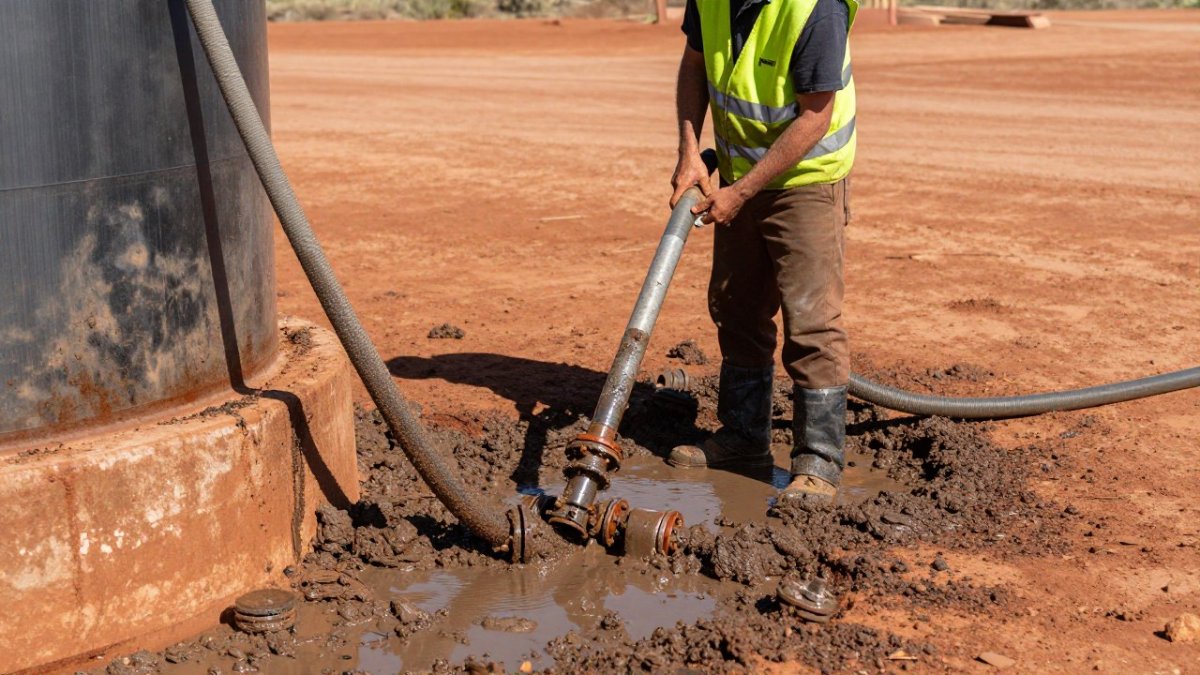
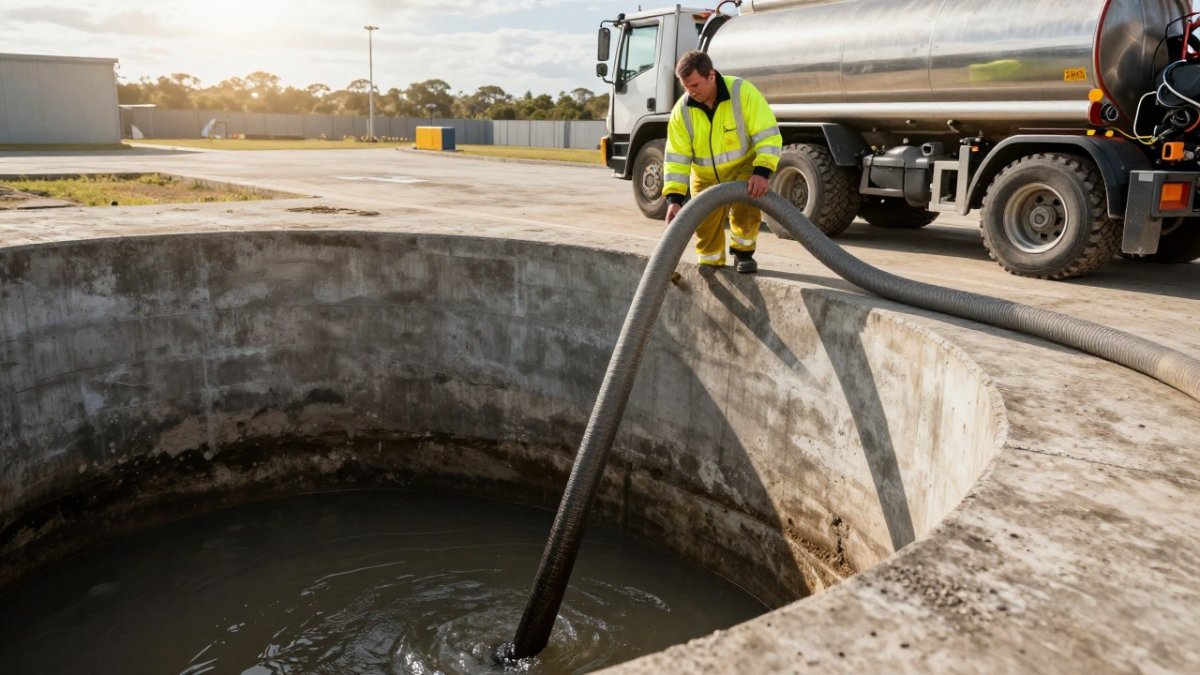
Small site liquid waste services handle the removal and disposal of liquid waste from construction sites, events, industrial facilities, and small businesses. These services collect everything from portable toilet waste to oily water, coolant, and sludge, then transport it to licensed facilities for proper treatment and disposal.
The key difference between small site services and large industrial operations is scale and flexibility. Small site liquid waste services work with sites that don't generate massive volumes, but still need reliable, regular collection. Industrial liquid waste removal services include waste water, coolant, oily water, sludge, and tank and pit cleaning across Kwinana and Perth. Think construction projects with a handful of portable toilets, a workshop that empties one holding tank every few months, or an event venue needing temporary sanitation solutions.
At Kwinana Site Services, we've spent 18 years in WA liquid waste. We provide straightforward quotes with no hidden surprises and reliable service that turns up when promised.
The reason you're looking for small site liquid waste services probably falls into one of these categories:
- You run a construction site and need regular pump-outs
- You manage an event or temporary venue requiring portable sanitation
- You operate a workshop or small industrial space with occasional waste disposal needs
- You're responsible for a commercial property with holding tanks
Whatever your situation, finding the right service provider matters more than you might think. A no-show can halt your entire operation. Hidden fees can blow your budget. Poor disposal practices can create legal problems down the track.
What information to gather before requesting a liquid waste removal quote
Before you contact any service provider, gather specific details about your site and waste. This speeds up the quoting process and helps you compare offers accurately.
Start with the basics about your waste streams. What types of liquid waste do you generate? Portable toilet waste is straightforward. But if you also have oily water from equipment cleaning, coolant from machinery, or sludge from wash bays, mention that upfront. Different waste types require different handling, and a provider needs to know what they're dealing with (the EPA).
Next, estimate your volume and frequency. How many portable toilets do you have? How often do they need emptying, weekly, fortnightly, monthly? If you're generating oily water or other industrial waste, how much accumulates between collections? Rough numbers are fine at this stage.
Document your site access details. Where exactly is the liquid waste located? Can a vacuum truck reach it easily, or are there tight access points, gates, or obstacles? Some sites require special equipment or careful maneuvering. Being upfront about access saves time and prevents surprises when the truck arrives.
Note your preferred collection schedule. Do you need regular weekly runs, or are you flexible? Do you sometimes need urgent callouts? Can collections happen during business hours, or do you need after-hours service?
Get your site's details ready. Are you a construction contractor, event organiser, industrial operator, or something else?
Finally, ask yourself what reliability means to you. Have you had bad experiences with no-shows or poor communication? What would make you trust a provider? This shapes which questions to ask when you're evaluating options.
Gather these key details about your site and waste before contacting service providers.
| Information | What to document | Why it matters |
|---|---|---|
| Waste types | Portable toilet waste, oily water, coolant, sludge | Different waste requires different handling |
| Volume and frequency | Number of toilets, weekly/fortnightly/monthly emptying | Helps provider give accurate quotes |
| Site access | Location of waste, obstacles, gates, tight points | Determines if special equipment is needed |
| Collection schedule | Regular weekly, flexible, after-hours needs | Shapes service availability and pricing |
| Site type | Construction, event, industrial, commercial | Helps match provider to your needs |
How to determine the right liquid waste collection frequency for your site
Collection frequency depends on volume generated and storage capacity.
Start with volume. If you're generating oily water or coolant, the accumulation rate matters.
Storage capacity is your practical limit. If your holding tank or waste storage area fills up before the next scheduled collection, you've got a problem.
Different waste types have different compliance rules. Check what applies to your waste type and location.
Talk to your provider about your site's patterns. If you generate more waste on certain days or seasons, discuss your schedule.
Construction site liquid waste removal: what you need to know
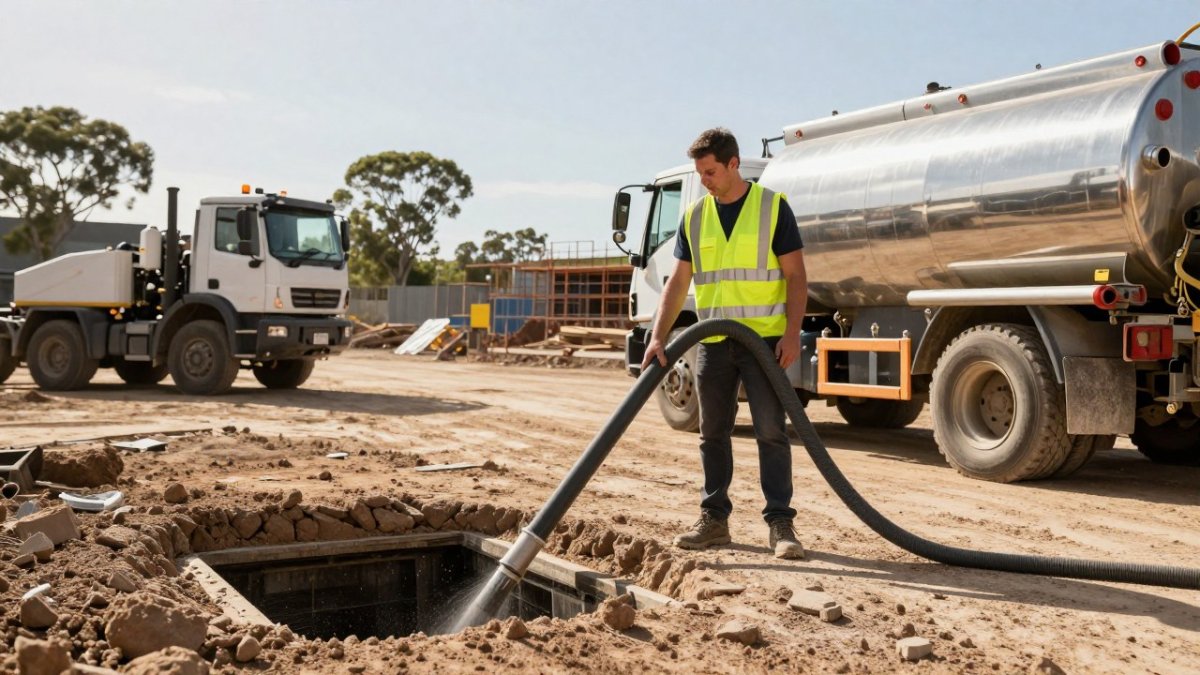
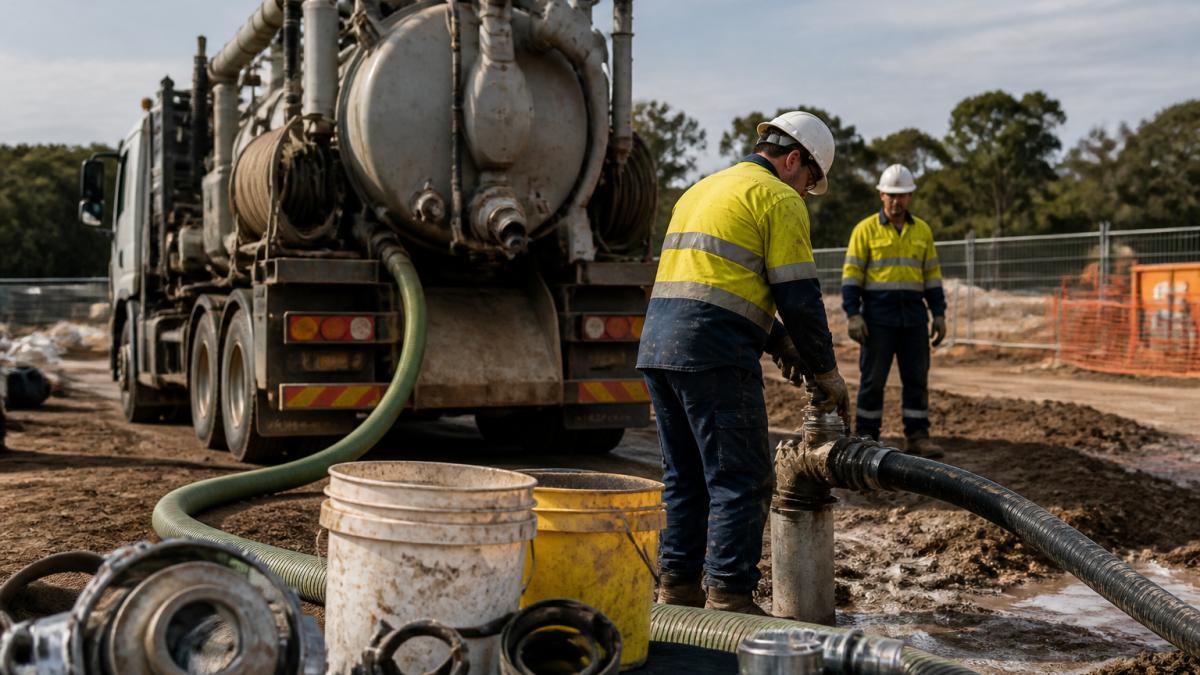
Construction sites produce multiple types of liquid waste. Portable toilets are the obvious one. But you may also deal with washout water from concrete trucks, runoff from site cleaning, and oily residue from equipment maintenance.
The challenge is managing liquid waste responsibly.
Construction sites may use a combination of services. Your provider can discuss the liquid waste services relevant to your site.
Timing matters on construction sites. You need collections scheduled around your work phases, not disrupting your crew.
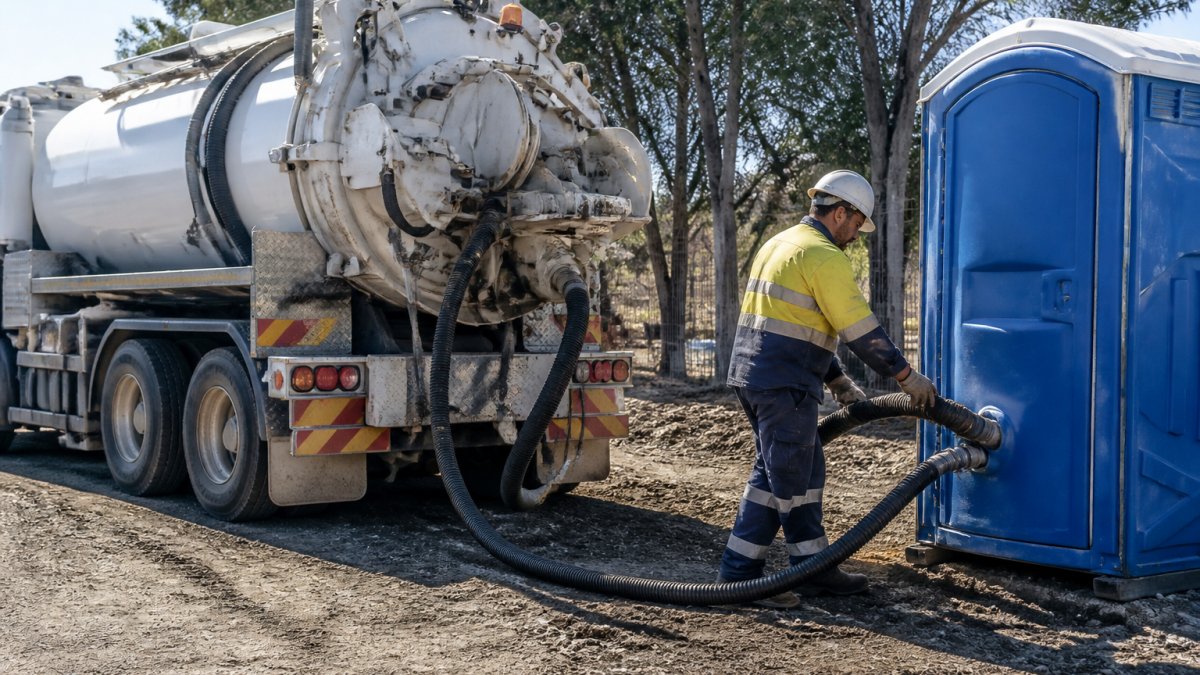
Kwinana Site Services offers site toilet and holding tank pump-outs for construction sites, with regular runs or one-off jobs. site toilet and holding tank pump outs for construction sites are available as regular runs or one-off jobs.
One thing construction managers may ask: what happens if you need an urgent collection? Equipment breaks down, a tank overflows, or your schedule changes. Ask your provider about availability.
Meeting liquid waste disposal requirements and compliance
Liquid waste disposal isn't just about removing it from your site. It has to go somewhere legal and safe. That's where compliance comes in.
Different waste types have different disposal requirements. Kwinana Site Services states that waste is disposed of properly at licensed facilities.
This matters because improper disposal can create serious problems.
Ask your provider where your waste goes and whether the facilities are licensed.
Different waste streams may have different requirements. Check what applies to your specific waste. Wash bay and oil separator cleaning is a service offered by Kwinana Site Services.
The key step is choosing a provider that takes disposal seriously. Ask about its disposal methods.
Evaluating service providers: reliability and transparency
When you're comparing liquid waste services, consider reliability and transparency.
Start with reliability. Can they commit to a collection schedule and stick to it? Ask directly: "What's your track record for on-time collections?"
Ask about communication. How do you book collections? What happens if you need to change a booking? Can you reach someone if there's a problem?
Transparency in pricing is non-negotiable. Ask what's included in the quote. Get it in writing.
Ask about equipment and capabilities. Do they handle your specific waste type? Can they access your site?
References may help when evaluating a provider. If references are available, ask about reliability, communication, and whether the service matched the quoted price.
Finally, trust your gut. If a provider seems disorganised, defensive about their practices, or unwilling to answer questions, keep looking.
Getting a quote and booking your first service
Once you've narrowed down your options, requesting a quote is straightforward.
Contact your chosen provider with the information you've gathered: site location, waste types, estimated volume, desired collection frequency, and any access considerations. The more detail you provide, the more accurate the quote will be.
Ask for a clear quote and check what it includes. If anything is unclear, ask before you commit.
Compare quotes carefully and consider the service details as well as the price.
Once you've chosen a provider, confirm your collection schedule and provide site access details.
For your first collection, plan to be on site or have someone available.
Get a quote or book a job directly through our website or by phone. We provide straightforward quotes with no hidden surprises and dispose of waste properly at licensed facilities. We offer regular runs or one-off jobs.
Frequently Asked Questions
What counts as liquid waste on a small site?
Liquid waste can include portable toilet contents, wastewater from wash bays, oily water from machinery maintenance, coolant, and sludge. Kwinana Site Services lists site toilet and holding tank pump-outs, wash-bay and oil-separator cleaning, and industrial liquid waste removal among its services.
How often should a small site schedule a liquid waste pump-out?
Collection frequency depends on your waste volume, tank size, and site activity. Kwinana Site Services offers regular runs or one-off jobs.
What information should I provide when requesting a liquid waste removal quote?
When requesting a quote, provide details about your site and the waste you need collected. Kwinana Site Services offers regular runs or one-off jobs and straightforward quotes with no hidden surprises.
How can I verify that liquid waste is disposed of appropriately?
Kwinana Site Services states that waste is disposed of properly at licensed facilities.
Finding and hiring small site liquid waste services doesn't have to be complicated. Gather the right information, ask the right questions, and choose a provider that values reliability and transparency. Your site runs smoothly when waste management is handled properly, and that starts with choosing a service you can trust.